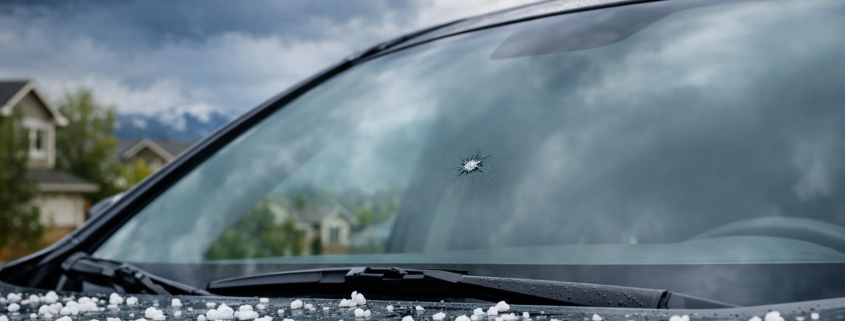
Close-up stock photo of a car windshield with a chip and hailstones on the hood, outdoors in a Colorado suburb with stormy spring sky.

A practical guide for Highlands Ranch drivers who want clear answers before the next storm

Colorado’s Front Range sits in “Hail Alley,” and the damaging season typically ramps up mid-April and runs into late summer. For many Highlands Ranch households, it’s not a question of if a windshield will chip or crack—it’s when. The frustrating part is that “windshield replacement insurance” can mean very different things depending on your policy: comprehensive vs. collision, glass endorsements, deductible rules, and whether advanced safety systems need recalibration.

Below is a straightforward breakdown of what most Colorado drivers need to know, the decisions that actually affect out-of-pocket costs, and how to handle a claim without getting steered into a solution that doesn’t fit your vehicle or budget.

How windshield replacement is covered in Colorado (and what “glass coverage” really means)

Most windshield claims fall under comprehensive coverage (sometimes called “other than collision”). Comprehensive is typically the part of an auto policy that addresses non-collision events such as hail, flying debris, vandalism, or theft-related damage.

Quick rule of thumb
Hail/rock chip/flying debris: usually comprehensive
Crash impact (you hit something or something hits you in a collision): usually collision

Many drivers hear “full glass” or “$0 glass” and assume it’s required or automatic. In Colorado, it’s common for insurers to offer optional glass coverage (or a separate glass deductible), but it is not universally included by default. The details live on your declarations page—where you’ll see your comprehensive deductible and any specific glass options you elected.

Deductibles: the #1 reason a “covered windshield” still costs money

A windshield can be “covered” and still require you to pay your deductible. In practice, your out-of-pocket cost usually comes down to these three items:

What you have What it usually means Typical out-of-pocket
Comprehensive coverage (standard) Windshield damage is usually eligible, subject to your comp deductible. Your comp deductible (often $250–$1,000+)
Separate “glass deductible” endorsement Some policies set a lower deductible specifically for glass. Lower fixed amount (example: $0 or $100)
No comprehensive coverage Most non-collision glass damage won’t be paid by the policy. Likely full cost of repair/replacement

One more important Colorado-specific note: insurers (and repair vendors) are not allowed to rebate or refund your deductible as an “incentive” to use a particular shop. If someone’s advertising “we’ll waive your deductible,” that should be treated as a red flag and verified carefully. Colorado law restricts deductible rebates tied to glass repair/replacement.

Repair vs. replacement: when a chip can be fixed (and why it matters)

If you catch damage early, a chip repair may be possible. Repairing a chip can help prevent a spider-crack that turns into a full replacement, especially with Colorado temperature swings and spring hail.

Common reasons replacement is required
• The crack extends across the glass or continues growing
• Damage is in the driver’s primary line of sight
• Damage is near the edge (structural integrity concerns)

Coverage can differ between repair and replacement, depending on your carrier and endorsement choices. If your goal is minimizing out-of-pocket cost, the best move is to confirm your deductible and ask whether your policy treats repair differently than replacement.

Modern vehicles and ADAS: calibration costs you don’t want to discover after the fact

Many newer vehicles have cameras and sensors mounted to or near the windshield that support Advanced Driver Assistance Systems (ADAS)—features like lane-keeping assist, forward collision warnings, and adaptive cruise control.

If the windshield is replaced, those systems may require calibration to ensure safety features work correctly. This is where surprise costs can show up if it’s not handled correctly from the beginning. When you’re comparing quotes or deciding whether to file a claim, always ask:

• Does my vehicle require ADAS calibration after replacement?
• Is calibration included in the repair facility’s process and documentation?
• Will my policy treat calibration as part of the covered windshield loss?
• Will OEM glass be required or recommended for sensor/camera performance?

Step-by-step: how to file a windshield claim in Colorado without headaches

1) Confirm the coverage type and deductible before scheduling

Check your declarations page (or ask your agent) for: comprehensive deductible, any glass endorsement, and whether the policy lists a separate glass deductible.

2) Document the damage right away

Take photos from inside and outside the vehicle, including a wider shot showing the location on the windshield. If hail caused the damage, note the approximate time and place.

3) Ask about ADAS calibration (even if the crack looks “simple”)

Many windshields are no longer “just glass.” Confirm whether calibration is required and how it will be handled.

4) Clarify parts and workmanship expectations

Ask what glass is being installed (OEM vs. aftermarket), what warranty is provided, and whether the shop documents calibration results when applicable.

5) Keep claim and invoice records

Save the invoice, claim number, and any calibration documentation. If you sell the car later, paperwork can help support the vehicle’s maintenance history.

Highlands Ranch hail-season angle: what to review in April before storms start stacking up

April is when many Front Range drivers begin to see the first meaningful hail events. If you’re reviewing coverage now, focus on what actually changes your financial outcome:

Comprehensive deductible: If it’s $1,000–$2,500, a windshield claim may not make sense unless replacement and calibration costs clearly exceed it.
Glass endorsement option: If available, a lower glass deductible can be a practical fit in hail-prone areas.
Vehicle tech level: If your windshield integrates cameras/sensors, plan for calibration questions up front.
Garaging and commute realities: If you park outdoors at work or commute I-25 / C-470 corridors regularly, your exposure is different than a weekend-only vehicle.

If you want help translating your current declarations page into plain English, an independent agency can compare multiple carrier options and show what changes (and what doesn’t) when you adjust deductibles or add glass coverage.

Request a quote that fits Colorado hail reality (not a one-size-fits-all policy)

Mountain Storm Insurance helps Highlands Ranch drivers compare carriers and tailor deductibles and glass options around real-world risk—especially heading into hail season. If you’re trying to reduce surprise windshield expenses, we’ll review your current setup and show clear trade-offs before you switch.

FAQ: Windshield replacement insurance in Colorado

Does Colorado require free windshield replacement (zero deductible)?
Colorado policies commonly cover windshield damage under comprehensive, but zero-deductible replacement is not automatically guaranteed. Many insurers offer optional glass coverage or a separate glass deductible—your declarations page is the fastest way to confirm what you have.
If I have a $1,000 comprehensive deductible, should I even file a claim?
Sometimes yes, sometimes no. If your replacement plus required ADAS calibration is significantly above your deductible, filing can make financial sense. If the total cost is near or below your deductible, paying out of pocket can be simpler.
Will insurance pay for ADAS calibration after windshield replacement?
Often it can be covered as part of the windshield claim when replacement is covered, but it depends on your carrier and claim handling. Confirm coverage and documentation requirements before work begins.
Is chip repair treated differently than replacement?
It can be. Some policies handle repair more favorably than replacement, and some carriers encourage repair to prevent larger losses. Always confirm how your policy applies deductibles to repair vs. replacement.
Can a glass shop “waive my deductible” in Colorado?
Be cautious. Colorado restricts deductible rebates offered as an inducement tied to glass repair/replacement. If you see this advertised, verify details with your insurer and agent so you don’t end up responsible for unexpected costs or claim complications.

Glossary (quick definitions)

Comprehensive coverage
Auto coverage that typically applies to non-collision events like hail, vandalism, theft, and flying debris damage (subject to your deductible).
Deductible
The amount you pay out of pocket before insurance pays the remaining covered cost.
Glass endorsement / glass deductible
An optional policy feature that may set a different (often lower) deductible for windshield/glass claims than your standard comprehensive deductible.
OEM glass
Original Equipment Manufacturer glass—made to the same specifications as the glass installed at the factory (terminology and availability vary by vehicle and carrier rules).
ADAS calibration
The process of aligning and verifying cameras/sensors (often mounted near the windshield) so safety systems function correctly after a windshield replacement.