Damaged car after road collision incident on asphalt street with shattered debris at sunset or sunrise traffic lights and blurred background

A practical guide for Highlands Ranch drivers planning summer trips, commuting more, and sharing the road with heavier traffic

Hit-and-run crashes feel uniquely stressful because you’re left with damage (or injuries) and no clear “other insurance company” to call. The good news: the right auto policy can still protect you—even when the other driver is never identified. The not-so-good news: many drivers assume they’re covered when they’re not, or they don’t realize which coverage applies until after a claim.

Below is a clear, Colorado-specific breakdown of what typically pays after a hit-and-run, how to document the incident so your claim goes smoothly, and how Mountain Storm Insurance helps Highlands Ranch drivers choose coverage that works in real emergencies—not just on paper.

First: “Hit-and-run” is an insurance problem and a documentation problem

In Colorado, uninsured/underinsured motorist coverage (often called UM/UIM) is optional coverage you can add to your auto policy. It’s designed to step in when the at-fault driver has no insurance, not enough insurance, or can’t be identified (as in many hit-and-run situations). That means your ability to recover after a hit-and-run often comes down to:

1) Which coverages you carry (UM/UIM, collision, medical payments, etc.)
2) How well you document the incident (police report, photos, witness info, timelines)

If you’re a summer driver—road trips, weekend mountain runs, more hours on I-25/C-470—this is the season when being prepared matters most.

What insurance typically pays after a hit-and-run in Colorado

Hit-and-run claims usually fall into two buckets: injuries and vehicle/property damage. The coverages that respond can be different.
Scenario Coverage that often applies What it can help pay
You’re injured and the other driver flees Uninsured/Underinsured Motorist (UM/UIM) (optional in Colorado) Injury-related damages (depending on your policy terms/limits)
Your car is damaged (no injuries) Collision (if you carry it) Repair costs (minus deductible), sometimes rental reimbursement if you have it
Your parked car is hit and the driver leaves Collision (often) or sometimes other options depending on your policy/state rules Repairs (minus deductible), towing if you have roadside/tow coverage
You need immediate treatment regardless of fault Medical Payments (MedPay) (if you carry it) Certain medical expenses for you/occupants (up to your MedPay limit)
Important Colorado note: UM/UIM coverage is optional in Colorado, which means it’s easy to be underprotected unless you intentionally add it and choose adequate limits. 

Quick “Did you know?” facts that matter after a hit-and-run

Colorado requires immediate notice to law enforcement for reportable crashes. If there are injuries, death, or property damage, Colorado law directs drivers to give immediate notice to the nearest police authority and follow instructions to remain/return if directed. 
UM/UIM can be the coverage that “stands in” for the missing driver. If the other driver can’t be identified or is uninsured/underinsured, UM/UIM is designed to protect you up to your selected limits (subject to policy terms). 
Move Over is a real safety issue—especially during summer road trips. Colorado law requires drivers to move over or slow to a safe speed when passing certain stopped vehicles with flashing lights (emergency, tow, utility). This reduces secondary crashes when people are stranded roadside. 

Step-by-step: What to do right after a hit-and-run (to protect your claim)

1) Get to safety and check for injuries

If you can move, get out of active lanes and turn on hazard lights. If someone is injured, call 911. Safety comes first—especially on I-25, C-470, Santa Fe, and busy Highlands Ranch arterials where secondary collisions happen fast.

2) Call law enforcement (don’t “handle it later”)

A police report can be a key part of proving the loss was a hit-and-run and documenting the time, location, and your statement while the details are fresh. Colorado law includes a duty to give immediate notice for reportable accidents. 

3) Capture evidence—fast and wide

Take photos/video of: (a) your vehicle from all angles, (b) skid marks and debris, (c) the intersection/road signs, (d) any paint transfer, and (e) your injuries if visible. If you can safely do so, note the direction the other vehicle fled, and write down any partial plate, make/model, color, bumper stickers, or unique damage.

4) Find witnesses and nearby cameras

Ask witnesses for names and phone numbers. Look for doorbell cameras, businesses, HOA entrances, and traffic cameras. Even if footage is overwritten quickly, knowing where it exists helps law enforcement (and sometimes your insurer) request it sooner.

5) Notify your insurer promptly and be consistent

Provide the police report number, photos, and a simple timeline. Consistency matters more than perfect wording. If you’re unsure what coverage should apply, that’s where an independent agency can help you understand your options before you commit to a repair plan or accept a settlement.

Coverage checklist: Build a policy that handles real hit-and-run scenarios

If your goal is “don’t leave me stranded financially if the other driver disappears,” focus on these items:

UM/UIM (Uninsured/Underinsured Motorist): Optional in Colorado, and often the backbone coverage for hit-and-run injuries. Choose limits intentionally—don’t assume the default is enough. 
Collision: Often, what repairs your car when the at-fault driver can’t be identified. Your deductible matters here—ask yourself what you could comfortably pay on short notice.
MedPay: Helpful for immediate medical expenses for you and passengers, regardless of who caused the crash (up to the policy limit). This can be valuable even if an injury feels “minor” on day one.
Roadside assistance / towing & labor + rental reimbursement: Not glamorous, but very practical for summer travel—especially if a hit-and-run leaves your car undrivable far from home.

Mountain Storm Insurance is an independent agency, which means we can compare multiple carriers and help you prioritize these protections based on how you actually drive—commuting patterns, mountain travel, teen drivers, rideshare exposure, and vehicle value.

Highlands Ranch local angle: where hit-and-run risk and “stranded risk” often show up

Highlands Ranch drivers frequently split time between neighborhood roads, retail corridors, and highways feeding the Denver metro. In practice, many hit-and-run claims come from:

Parking lots and curbside damage: Grocery runs, gyms, trailheads—your car gets clipped, and the other driver leaves.
Stop-and-go traffic: Low-speed rear-ends where the at-fault driver panics and takes off.
Road trips: When you’re far from home, a “minor” crash becomes a towing + rental + schedule problem. Roadside and rental coverage can be the difference between an inconvenience and a travel derailment.

Also, if you’re ever forced onto the shoulder for a breakdown or collision, Colorado’s move-over/slow-down requirements are a reminder to prioritize safe positioning and visibility while you wait for help. 

A simple summer-ready “hit-and-run protection” review

Before travel season peaks, take 5 minutes and check:

• Do I have UM/UIM? If yes, are the limits high enough to protect my household?
• Do I have collision? If I file a claim tomorrow, can I pay the deductible comfortably?
• Do I have MedPay? Would urgent care/ER costs be disruptive?
• Do I have rental + roadside? If my car is undrivable 200 miles from home, what’s my plan?
• Do I know my insurer’s claims steps? Where is my policy ID card, and how do I start a claim?

If you want an agent to sanity-check your current policy against the way you drive (commute + summer road trips), Mountain Storm Insurance can review your coverage and show options across multiple carriers—without guessing.

Want to confirm you’re covered for a hit-and-run before your next trip?

Request a quote or a quick coverage review. We’ll walk through UM/UIM, collision deductibles, MedPay, and the add-ons that matter when you’re stranded far from home—then compare multiple carrier options to fit your budget.

Request a Quote

FAQ: Hit-and-run insurance in Colorado

Is uninsured motorist coverage required in Colorado?
No—Colorado treats UM/UIM as optional coverage. That’s why it’s worth confirming whether you have it and what limits you selected. 
If the other driver is never found, can I still make a claim?
Often, yes. Vehicle repairs commonly run through collision coverage, and injuries may be addressed through UM/UIM and/or MedPay, depending on your policy. Your documentation (police report, photos, witnesses) can make a major difference.
Should I call the police after a hit-and-run in Colorado?
Yes—especially if there are injuries or meaningful property damage. Colorado law includes a duty to give immediate notice to the nearest law enforcement office for reportable accidents. 
Will a hit-and-run claim raise my rates?
Rating impacts vary by carrier, driving history, claim details, and coverage type. The best move is to focus on accurate reporting and ask your agent to explain how your specific carrier typically treats not-at-fault losses.
What’s the most common coverage gap you see for hit-and-runs?
Two big ones: (1) skipping UM/UIM because it’s optional, and (2) carrying collision but choosing a deductible that’s hard to pay when something happens unexpectedly.

Glossary (plain-English)

UM/UIM (Uninsured/Underinsured Motorist)
Optional coverage in Colorado that can help protect you if the at-fault driver has no insurance, not enough insurance, or can’t be identified in certain situations. 
Collision Coverage
Coverage that can pay to repair or replace your vehicle after a crash (often including hit-and-run damage), typically minus your deductible.
Deductible
The amount you pay out of pocket before your coverage pays the remaining covered costs (commonly applies to collision and comprehensive).
MedPay (Medical Payments)
Coverage that can help pay certain medical expenses for you and passengers after an auto accident, regardless of fault, up to the policy limit.
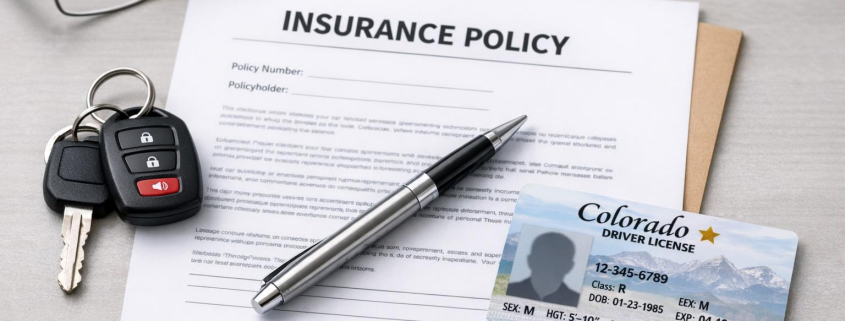
A stock photo showing car keys, an insurance document, and a Colorado driver's license arranged on a table, representing non-owner car insurance in Colorado.

Don’t own a car, but still drive? Colorado can still expect you to be insured.

Non-owner car insurance is a liability policy designed for people who don’t own a vehicle but still drive occasionally—borrowing a friend’s car, renting cars, or staying insured between vehicles. For many Colorado residents (especially during life transitions like moving, selling a car, or navigating license reinstatement), it’s a simple way to stay legal, protect your finances, and avoid costly “coverage gaps” that can raise premiums later.

What is non-owner car insurance (and what it isn’t)?

Non-owner insurance is typically a liability-only auto policy written for a driver who does not own or regularly have access to a vehicle. It’s meant for occasional driving—not for someone who uses the same household car every day.
It usually helps pay for injuries and property damage you cause to others in an at-fault accident. It can also be used in many situations where you need to file an SR-22 but don’t own a car (more on that below).
Not the same as “full coverage.” Non-owner policies typically do not include comprehensive or collision for a vehicle you’re driving, because you don’t own that vehicle.

Who should consider non-owner car insurance in Colorado?

Non-owner coverage can be a strong fit if you:
Borrow cars occasionally (family, friends) but don’t own one
Rent vehicles frequently and want liability protection beyond what a rental company offers
Sold your car and are between vehicles, but want to avoid a lapse in insurance history
• Need proof of insurance for license reinstatement (often with an SR-22 filing)
• Have a teen/young adult who drives occasionally but doesn’t own a car (depending on household setup—this one requires careful review)
When non-owner coverage is usually not appropriate: If you have regular access to a specific vehicle (especially one in your household), insurers may require you to be listed on that vehicle’s policy instead. This is one of the most common (and expensive) misunderstandings we help clients avoid.

Colorado minimum liability limits (and why “minimum” can still be risky)

Colorado requires drivers to carry liability insurance, and the commonly referenced state minimum limits are 25/50/15 (often written as 25,000 / 50,000 / 15,000). That means a policy may pay up to $25,000 for bodily injury per person, $50,000 per accident, and $15,000 for property damage. While these limits can satisfy legal requirements, they may not go far after a serious crash involving medical bills or newer vehicles.
Coverage Part What it helps pay for Colorado “25/50/15” example
Bodily Injury (per person) Injuries you cause to someone else $25,000
Bodily Injury (per accident) Total injury coverage for everyone hurt $50,000
Property Damage Damage you cause to vehicles/property $15,000
A practical approach is choosing limits that match what you’re protecting: your savings, future wages, and your family’s stability. A slightly higher liability limit can be a cost-effective way to reduce worst-case financial risk—especially for parents, households with teen drivers, or anyone frequently driving in high-traffic areas.

Non-owner insurance + SR-22 in Colorado: how it commonly works

An SR-22 isn’t a type of insurance—it’s a state-required filing your insurer submits to the Colorado DMV showing you carry the required liability coverage. If the policy cancels or lapses, the insurer can notify the state, which may trigger additional penalties or a new suspension period.
If you need an SR-22 but don’t own a car, a non-owner policy with an SR-22 filing is often the cleanest solution. It keeps you compliant while you rebuild your driving record, even during a “no car” phase of life.
Important: SR-22 requirements are very specific to your situation (reason for suspension, timeframe, reinstatement steps). If you’re unsure, it’s smart to confirm what Colorado requires before you buy any policy so the filing is done correctly and on time.

What non-owner car insurance typically covers (and common gaps)

Often included:
• Liability for bodily injury and property damage (within your selected limits)
• Option to add certain endorsements in some cases (availability varies by carrier)
Often not included:
• Damage to the car you’re driving (collision/comprehensive)
• Regular-use household vehicles (you may need to be listed on that policy instead)
• Business use driving (delivery/rideshare typically needs separate coverage)
Real-world example: If you borrow a friend’s car and cause an accident, your friend’s policy may be primary. A non-owner policy can help as secondary liability protection, depending on policy language and the situation. This is why reviewing how often you drive and whose vehicles you use matters.

Step-by-step: how to shop for non-owner car insurance in Colorado (without overpaying)

1) Be precise about how often you drive and which cars you use

“Occasional borrowing” is different from “I drive my partner’s car every day.” If you have regular access to a household vehicle, the correct solution is often being listed as a driver on that vehicle’s policy—not a non-owner policy.

2) Pick liability limits that protect your income—not just your registration

Minimum limits may satisfy the law, but they can leave you exposed if injuries are serious. Many families choose higher limits for peace of mind, especially around Denver’s commuting corridors and winter driving conditions.

3) Ask about “lapse” impact if you recently sold your car

Even a short gap in coverage history can sometimes increase your cost later. A non-owner policy may help keep continuous insurance history when you’re between vehicles.

4) If you need an SR-22, confirm the filing details before binding

Make sure the policy is written correctly as non-owner (if appropriate) and that the SR-22 filing is submitted to Colorado in the way the DMV requires. Timing matters—late filings can create expensive setbacks.

5) Compare multiple carriers (this is where independent agents shine)

Non-owner pricing and eligibility can vary widely by company. An independent agency can shop multiple carriers and help you avoid mismatches (like buying non-owner when you actually need a named-driver or owner policy).

Local angle: driving realities around Highlands Ranch

Highlands Ranch drivers often split time between neighborhood errands and higher-speed routes into metro Denver. That mix—plus winter weather, hail seasons, and heavy traffic patterns—can raise the stakes of any at-fault accident. If you’re borrowing cars during a transition (new job, new household, teen driver learning phase, or waiting on a vehicle purchase), non-owner insurance can be a practical bridge that keeps you protected while your situation changes.
If you’re in nearby communities we serve—like Fort Collins, Silverthorne, Winter Park, Breckenridge, Vail, Greeley, or Eaton—we can also help you compare options that reflect local driving conditions and insurer appetites in those areas.

Get a non-owner insurance quote that fits your exact situation

Mountain Storm Insurance is an independent, locally owned agency based in Highlands Ranch. We’ll confirm whether a non-owner policy is truly the right match, help you choose sensible liability limits, and shop multiple carriers for competitive pricing—without the jargon.

FAQ: Non-owner car insurance in Colorado

Does non-owner insurance cover the car I’m driving?

Usually, it covers your liability for injuries and property damage you cause to others. It typically does not pay to repair the vehicle you borrowed. The owner’s policy and any applicable coverages are the place to look for physical damage protection.

If I live with someone who owns a car, can I buy non-owner coverage instead of being listed?

Often, no. If you have regular access to a household vehicle, insurers commonly require you to be listed on that vehicle’s policy. Buying the wrong policy can lead to claim complications later.

Can I get an SR-22 if I don’t own a car?

In many cases, yes—an insurer can file an SR-22 on a non-owner policy. This is common for license reinstatement situations where the state requires proof of liability coverage even without vehicle ownership.

Is non-owner insurance cheaper than a standard auto policy?

Frequently, yes, because it’s typically liability-only and assumes you don’t have daily access to a vehicle. Price still depends on driving history, SR-22 needs, prior coverage, location, and insurer guidelines.

What information do I need to request a non-owner quote?

Your driver’s license details, address history, driving history (tickets/accidents), whether an SR-22 is required, and a clear description of how often you drive and whose vehicles you borrow or rent.

Glossary (plain-English definitions)

Non-owner auto insurance
A liability auto policy for drivers who don’t own a vehicle but still drive occasionally.
Liability coverage
Coverage that helps pay for injuries and property damage you cause to others in an at-fault accident.
25/50/15
A common way to express liability limits (per person/per accident/property damage). In Colorado, these limits are widely referenced as the minimum required amounts.
SR-22
A form filed by an insurer with the state to prove you carry required liability insurance, often after a license suspension or certain violations.
Coverage lapse
A gap in insurance history (no active policy). Even short lapses can sometimes increase rates later.
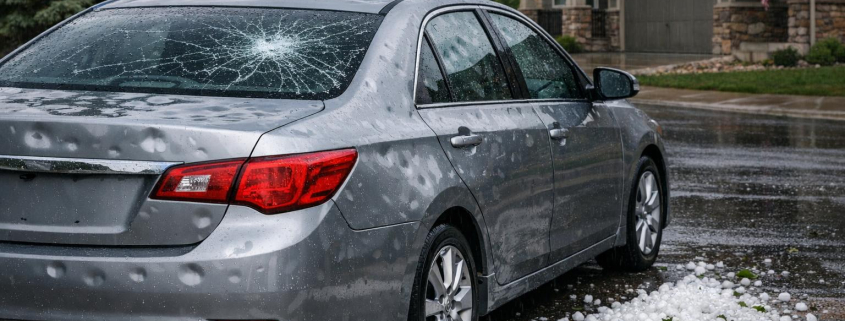
Stock photo of a hail-damaged car with dents and a cracked windshield in a Colorado neighborhood, captured after a storm with wet pavement and cloudy skies.

A practical guide for Highlands Ranch drivers heading into hail season

If you drive in Colorado, hail isn’t a “maybe.” It’s a when. The tricky part is that many drivers don’t find out what their policy really does (or doesn’t) cover until they’re standing next to a dimpled hood or staring through a spiderwebbed windshield.

Below is a plain-English breakdown of hail damage car insurance in Colorado: which coverage pays, how deductibles work, what happens with glass claims, and the steps that help you move faster (and spend less) after the next storm.

What insurance covers hail damage to your car?

Hail is considered a non-collision event. In most standard personal auto policies, hail damage is handled under comprehensive coverage (sometimes called “other-than-collision”). Comprehensive is also the coverage that usually applies to theft, vandalism, falling objects, fire, and many weather losses. If you don’t carry comprehensive coverage, hail damage to your vehicle is typically not covered.

Quick coverage check (common scenarios)

What happened? Usually covered by Typical out-of-pocket? Notes
Hail dents hood/roof/trunk Comprehensive Your comp deductible Paintless dent repair (PDR) is often used if paint isn’t cracked.
Windshield cracks from hail Comprehensive (glass may be special) Often your comp deductible (varies) Some policies offer separate glass options or repair-first programs.
You skid in a storm and hit a curb Collision Your collision deductible Even though weather contributed, it’s still a collision loss.
Hail damages your car, but you only have liability Not covered Full repair cost Consider comp if hail risk is a concern.
Coverage always depends on your policy language and endorsements. If you’re unsure what you carry, your declarations page (the “dec page”) tells you quickly.

Deductibles: the #1 reason hail claims feel confusing

If your vehicle is insured with comprehensive coverage, you’ll have a comprehensive deductible (commonly $250, $500, $1,000, or higher). That deductible is the part you pay before the insurer pays the remaining covered amount.

A realistic example

Hail repair estimate: $3,200. Your comprehensive deductible: $1,000. If the claim is covered, you typically pay $1,000 and insurance covers the remaining $2,200 (subject to policy terms and settlement method).

Important: When storms hit the Front Range, some carriers place temporary restrictions on changing physical damage deductibles (or adding coverage) while severe weather watches/warnings are active. That’s one reason it pays to review coverage before peak hail months.

Glass claims in Colorado: repairs, replacements, and “free windshield” myths

Many Colorado drivers have heard that windshield replacement is “free” or “required by law.” In reality, Colorado does not have a statewide law that forces insurers to offer zero-deductible windshield replacement on every policy. Whether you pay a deductible depends on your carrier, your policy, and any glass-specific options you selected.

Practical takeaway: treat windshield coverage as something you should verify, not assume. Ask two specific questions:

  1. If my windshield is damaged by hail, does it fall under comprehensive—and does my comprehensive deductible apply?
  2. Do I have any separate glass endorsement, repair waiver, or deductible reduction for glass?

If you commute on C-470, I-25, or travel into the foothills often, glass coverage can be one of the most “felt” parts of your policy because small chips can spread quickly with Colorado temperature swings.

Did you know? Quick hail facts that matter for claims

Severe hail starts at 1 inch
The National Weather Service generally issues a severe thunderstorm warning when hail is 1 inch or larger (or winds are 58 mph+). That’s big enough to crack glass and dent panels.
Colorado’s hail season has a predictable window
Colorado’s “typical” severe hail season is often described as running from mid-April to mid-August, with frequent activity in late spring and early summer.
Comprehensive vs. collision is a real cost lever
Hail losses are commonly handled under comprehensive. If your comp deductible is high, you may “feel” hail losses more than you expect.

Step-by-step: What to do after hail damages your car

1) Document the damage the same day

Take clear photos in good lighting: wide shots (whole vehicle), close-ups (each panel), and the windshield from inside and outside. If you can, capture a brief video walk-around. Keep a note of where the vehicle was parked and roughly when the storm hit.

2) Confirm which deductible applies

Most hail claims route to comprehensive, but glass can be handled differently depending on the policy. Before scheduling repairs, confirm whether your deductible is waived, reduced, or fully applied.

3) Choose the right repair method (PDR vs. body shop)

If hail dents didn’t crack paint, paintless dent repair is often the preferred method because it preserves factory finish and may be faster. If paint is broken or panels are stretched, traditional body work may be needed.

4) Watch for “too good to be true” offers

After big storms, pop-up vendors can appear quickly. Be cautious with offers that promise to “cover your deductible” in ways that don’t make sense or pressure you to sign over payment rights without clear terms. If something feels off, pause and ask your agent to review the plan.

5) Ask about timelines and rental coverage

If your vehicle is not safely drivable (for example, visibility issues from windshield damage), ask whether you have rental reimbursement and what daily/total limits apply. Scheduling can tighten quickly after widespread hail.

Highlands Ranch local angle: why preparation matters here

Highlands Ranch sits right in the wider Front Range corridor where spring and early summer storms can build fast. When hail hits Douglas County and the south Denver metro, the practical challenge isn’t just the storm—it’s the surge: body shops book out, glass vendors get slammed, and claim volume can slow down inspections.

A quick “before the next warning” checklist

  • Review your comprehensive deductible and decide if it still fits your budget.
  • Confirm whether you have any glass-specific option or windshield deductible waiver.
  • If you lease/finance, make sure you carry comprehensive + collision as required by the lender.
  • Keep your insurer/agent contact info saved so you’re not searching during a storm.

Want a quick coverage check? You can also explore our Auto & Vehicle Insurance page for an overview of how we help drivers match coverage to Colorado’s real-world risks.

CTA: Make sure your policy is ready for hail season

Mountain Storm Insurance is an independent, locally owned agency based in Highlands Ranch. We can compare options from multiple carriers and help you understand what “hail coverage” really means on your specific policy—especially your comprehensive deductible and glass coverage.

FAQ: Hail damage car insurance in Colorado

Will my rates go up if I file a hail claim?

It depends on your carrier and your overall rating factors. Hail is typically treated as a comprehensive (non-collision) claim, which is often rated differently than at-fault accidents. The safest approach is to ask how your specific carrier handles comprehensive claims and consider the claim amount relative to your deductible.

If my car has hail dents but still drives fine, should I file a claim?

Consider (1) the repair cost versus your deductible, (2) whether the damage affects resale value, and (3) whether you have a lease return standard to meet. If the estimate is only slightly above your deductible, you may prefer to handle it out of pocket.

Does liability-only insurance cover hail damage?

No. Liability coverage pays for injuries and damage you cause to others. Hail damage to your own vehicle is usually covered only if you carry comprehensive coverage.

Is windshield replacement “free” in Colorado?

Not automatically. Some policies may offer glass-friendly options, but there’s no blanket statewide rule that guarantees zero-deductible windshield replacement for every driver. Check your declarations page and ask your agent how glass is handled under your plan.

What if hail damages both my roof at home and my car?

Those are usually separate claims under separate policies (homeowners for the home, auto for the vehicle). If you want to reduce coordination stress, bundling can help—just make sure both policies have deductibles you can comfortably handle during the same season. If you need both, see our Property Insurance overview as well.

Glossary (helpful hail-claim terms)

Comprehensive coverage
Auto coverage that typically pays for non-collision losses like hail, theft, vandalism, and certain weather events (subject to your policy).
Collision coverage
Coverage that typically pays when your vehicle is damaged in a collision with another vehicle or object (subject to your collision deductible).
Deductible
The amount you pay out of pocket on a covered claim before the insurer pays the remaining covered amount.
PDR (Paintless Dent Repair)
A repair method that removes dents without repainting, often used for hail when paint isn’t cracked.
Declarations page (“Dec page”)
The summary page of your policy listing your coverages, limits, deductibles, vehicles/insureds, and effective dates.

If you’d like a quick review focused on hail damage car insurance in Colorado—especially comprehensive deductibles and windshield coverage—visit our Request a Quote page and we’ll help you sort the details before the next storm rolls through.