Car being loaded onto a towing truck during sunset in an urban area

Peace of mind for road trips, commutes, and mountain miles

When June hits Colorado, schedules fill up fast: weekend getaways, heavier I-25 traffic, mountain passes, and longer commutes. The same season that brings more driving also brings more chances for a flat tire, dead battery, overheating, or an unexpected “check engine” moment—often far from home.

Roadside assistance can help you get unstuck quickly, but the details matter. “Roadside assistance car insurance in Colorado” can mean very different things depending on your carrier, limits, and how the coverage is triggered. Below is a practical, real-world guide to what roadside assistance typically covers, what it usually does not cover, and the key questions to ask before travel season peaks.

What “roadside assistance” usually means on a car insurance policy

Roadside assistance is commonly an optional endorsement (add-on) to an auto policy. It’s designed for short-notice help when your vehicle becomes disabled—think “I can’t safely drive it right now,” not “I need maintenance.”

While each carrier’s wording is different, roadside assistance commonly includes:

Typical covered services:
Towing to a repair facility (often within a mileage limit or dollar cap)
Battery jump-start (or sometimes minor on-site battery help)
Flat tire help (installing your spare; tire repair/replacement is typically not included)
Lockout assistance (unlocking a vehicle; key replacement usually not included)
Fuel delivery (delivery service may be covered; the fuel cost may be extra depending on plan)

What roadside assistance usually does NOT cover (the “surprise” items)

Most roadside programs are built for emergencies, not repairs. That distinction is where many frustrations happen—especially when you’re stranded outside Highlands Ranch and just want the problem fixed.

Common exclusions and limitations often include:

Repairs or labor at a shop (roadside typically gets you to help, not through the repair)
Parts and replacement items (new tire, new battery, new keys)
Long-distance towing beyond your limit (you may pay the extra mileage)
Non-disabling issues (some plans require the vehicle to be “disabled” to dispatch service)
Tip: if you regularly drive into the foothills, ski corridors, or across state lines, verify whether your plan’s towing limit is mileage-based, dollar-based, or “to nearest qualified shop.”

Roadside assistance vs. auto club membership: a quick comparison

Some Colorado drivers prefer an auto-club style membership because the benefits can follow the member (not always the vehicle), and towing mileage can be higher depending on the tier. For example, AAA’s published benefits vary by membership level—often including short-distance towing at entry level, and up to 100-mile tows on “Plus,” with a Premier tier that may include one 200-mile tow per membership year (terms vary by region). 

Insurance roadside assistance can still be a great fit—especially if you want it bundled, simple, and coordinated with your policy—but it’s worth comparing how you actually drive.

Feature Roadside via Car Insurance Auto Club Membership
How it’s priced Usually, a low-cost add-on to the policy Annual membership fee
Towing limits Often, a mileage or dollar cap (varies by carrier) Tiered mileage limits (example: up to 100 miles on some “Plus” tiers; one 200-mile tow on some “Premier” tiers) 
Who it follows Usually the covered vehicle on the policy Often, the member (depending on program rules)
Best for Drivers who want simple, bundled emergency help Drivers who take longer trips or want higher tow mileage options

A practical checklist: what to confirm before your next road trip

If you’re shopping “roadside assistance car insurance Colorado,” these are the make-or-break questions that determine whether the coverage helps in real emergencies:

Step-by-step questions to ask your agent

1) What’s the towing limit? Is it mileage-based, a dollar cap, or “to nearest shop”?
2) How many service calls do I get? Per year? Per breakdown? Per vehicle?
3) Does it cover winching or extraction? Helpful for winter shoulder seasons and muddy trailhead pull-offs.
4) What counts as “disabled”? Some plans won’t dispatch if the vehicle can still move.
5) What are the lockout rules? Is there a reimbursement cap? Any exclusions for key fobs or specialty keys?
6) Does using roadside affect my rate? Some carriers treat roadside events differently than at-fault accidents—ask how they’re recorded.

Safety matters: what to do while you’re waiting on help in Colorado

Roadside incidents are stressful, and the risk isn’t just the mechanical issue—it’s traffic moving inches from your door. National safety guidance emphasizes attentive, defensive choices around roadside situations and Move Over laws. 

Colorado’s Move Over requirement is especially important for summer traffic and highway shoulders. Colorado has expanded Move Over protections to cover more stopped vehicles and roadside situations, and CDOT stresses moving over (when possible) and slowing down to protect people on the shoulder. 

Quick roadside safety habits

• Pull as far off the travel lane as you safely can; turn on hazard lights.
• If you can’t move the vehicle and conditions are unsafe, prioritize personal safety and visibility.
• Keep your phone charged before long drives; share your location with a family member.
• When passing others stopped roadside, move over a lane when possible and slow down. 

Local angle: what Highlands Ranch drivers should plan for

Highlands Ranch sits in a high-traffic corridor where “quick errands” can turn into long delays—especially around I-25 and C-470 during summer weekends. If you’re heading toward the foothills, trailheads, or mountain towns, towing distance becomes more than a detail; it becomes the difference between a minor inconvenience and a major bill.

A smart approach for Highlands Ranch drivers is to match your roadside coverage to your real routes:

Local commuting + school runs: prioritize quick dispatch, lockout, and battery help.
Front Range road trips: confirm towing limits and service call frequency.
Mountain driving: ask about winching/extraction language and whether there are special limitations.
If you’d like to review your current auto policy, start here: Auto & Vehicle Insurance. For a local office page, you can also visit: Home and Auto Insurance in Highlands Ranch, CO.

Want roadside coverage that fits how you actually drive?

Mountain Storm Insurance compares multiple carriers to help Highlands Ranch drivers choose practical coverage—especially for summer travel, heavier traffic, and longer trips across Colorado and Nevada.
Request a Quote

Prefer browsing first? Visit the Mountain Storm Insurance homepage or the contact page.

FAQ: Roadside assistance car insurance in Colorado

Does roadside assistance cover the cost of a new tire or battery?

Usually no. Roadside help commonly covers the service (like installing your spare tire or jump-starting a battery). The replacement tire/battery and most repair labor are typically your cost.

If my car breaks down in the mountains, will it tow all the way back to Highlands Ranch?

It depends on your plan’s towing limit (miles or dollars) and destination rules. Before you travel, confirm whether the policy allows towing to a destination of your choice or only to the nearest repair facility.

Is roadside assistance the same as rental reimbursement?

No. Roadside assistance helps with towing/jump-start/lockout-type events. Rental reimbursement is a different coverage that may help pay for a rental while your vehicle is being repaired after a covered claim.

What should I keep in my car for summer driving in Colorado?

A phone charger, water, a basic first-aid kit, a tire pressure gauge, and a flashlight are a strong start. If you frequently drive into less-traveled areas, consider a compact jump pack and reflective triangles.

Does Colorado’s Move Over law apply to regular cars stopped with hazard lights on?

Colorado has expanded Move Over protections, and CDOT emphasizes moving over and slowing down for more roadside situations—including disabled vehicles in many cases—so treat every roadside stop as a Move Over moment when it’s safe and legal to do so. 
More general insurance questions? Visit: Mountain Storm Insurance FAQ.

Glossary

Endorsement: An optional add-on that changes or expands what your auto insurance policy covers.
Disabled vehicle: A vehicle that can’t be safely driven due to a mechanical issue, flat tire, dead battery, or similar problem (definitions vary by provider).
Tow limit: The maximum your plan will pay for towing—often expressed as miles, a dollar amount, or a rule like “to the nearest repair facility.”
Winching / extraction: Pulling a vehicle out of a ditch, snowbank, mud, or a spot it cannot move from under its own power. Coverage varies and may have conditions.
Damaged car after road collision incident on asphalt street with shattered debris at sunset or sunrise traffic lights and blurred background

A practical guide for Highlands Ranch drivers planning summer trips, commuting more, and sharing the road with heavier traffic

Hit-and-run crashes feel uniquely stressful because you’re left with damage (or injuries) and no clear “other insurance company” to call. The good news: the right auto policy can still protect you—even when the other driver is never identified. The not-so-good news: many drivers assume they’re covered when they’re not, or they don’t realize which coverage applies until after a claim.

Below is a clear, Colorado-specific breakdown of what typically pays after a hit-and-run, how to document the incident so your claim goes smoothly, and how Mountain Storm Insurance helps Highlands Ranch drivers choose coverage that works in real emergencies—not just on paper.

First: “Hit-and-run” is an insurance problem and a documentation problem

In Colorado, uninsured/underinsured motorist coverage (often called UM/UIM) is optional coverage you can add to your auto policy. It’s designed to step in when the at-fault driver has no insurance, not enough insurance, or can’t be identified (as in many hit-and-run situations). That means your ability to recover after a hit-and-run often comes down to:

1) Which coverages you carry (UM/UIM, collision, medical payments, etc.)
2) How well you document the incident (police report, photos, witness info, timelines)

If you’re a summer driver—road trips, weekend mountain runs, more hours on I-25/C-470—this is the season when being prepared matters most.

What insurance typically pays after a hit-and-run in Colorado

Hit-and-run claims usually fall into two buckets: injuries and vehicle/property damage. The coverages that respond can be different.
Scenario Coverage that often applies What it can help pay
You’re injured and the other driver flees Uninsured/Underinsured Motorist (UM/UIM) (optional in Colorado) Injury-related damages (depending on your policy terms/limits)
Your car is damaged (no injuries) Collision (if you carry it) Repair costs (minus deductible), sometimes rental reimbursement if you have it
Your parked car is hit and the driver leaves Collision (often) or sometimes other options depending on your policy/state rules Repairs (minus deductible), towing if you have roadside/tow coverage
You need immediate treatment regardless of fault Medical Payments (MedPay) (if you carry it) Certain medical expenses for you/occupants (up to your MedPay limit)
Important Colorado note: UM/UIM coverage is optional in Colorado, which means it’s easy to be underprotected unless you intentionally add it and choose adequate limits. 

Quick “Did you know?” facts that matter after a hit-and-run

Colorado requires immediate notice to law enforcement for reportable crashes. If there are injuries, death, or property damage, Colorado law directs drivers to give immediate notice to the nearest police authority and follow instructions to remain/return if directed. 
UM/UIM can be the coverage that “stands in” for the missing driver. If the other driver can’t be identified or is uninsured/underinsured, UM/UIM is designed to protect you up to your selected limits (subject to policy terms). 
Move Over is a real safety issue—especially during summer road trips. Colorado law requires drivers to move over or slow to a safe speed when passing certain stopped vehicles with flashing lights (emergency, tow, utility). This reduces secondary crashes when people are stranded roadside. 

Step-by-step: What to do right after a hit-and-run (to protect your claim)

1) Get to safety and check for injuries

If you can move, get out of active lanes and turn on hazard lights. If someone is injured, call 911. Safety comes first—especially on I-25, C-470, Santa Fe, and busy Highlands Ranch arterials where secondary collisions happen fast.

2) Call law enforcement (don’t “handle it later”)

A police report can be a key part of proving the loss was a hit-and-run and documenting the time, location, and your statement while the details are fresh. Colorado law includes a duty to give immediate notice for reportable accidents. 

3) Capture evidence—fast and wide

Take photos/video of: (a) your vehicle from all angles, (b) skid marks and debris, (c) the intersection/road signs, (d) any paint transfer, and (e) your injuries if visible. If you can safely do so, note the direction the other vehicle fled, and write down any partial plate, make/model, color, bumper stickers, or unique damage.

4) Find witnesses and nearby cameras

Ask witnesses for names and phone numbers. Look for doorbell cameras, businesses, HOA entrances, and traffic cameras. Even if footage is overwritten quickly, knowing where it exists helps law enforcement (and sometimes your insurer) request it sooner.

5) Notify your insurer promptly and be consistent

Provide the police report number, photos, and a simple timeline. Consistency matters more than perfect wording. If you’re unsure what coverage should apply, that’s where an independent agency can help you understand your options before you commit to a repair plan or accept a settlement.

Coverage checklist: Build a policy that handles real hit-and-run scenarios

If your goal is “don’t leave me stranded financially if the other driver disappears,” focus on these items:

UM/UIM (Uninsured/Underinsured Motorist): Optional in Colorado, and often the backbone coverage for hit-and-run injuries. Choose limits intentionally—don’t assume the default is enough. 
Collision: Often, what repairs your car when the at-fault driver can’t be identified. Your deductible matters here—ask yourself what you could comfortably pay on short notice.
MedPay: Helpful for immediate medical expenses for you and passengers, regardless of who caused the crash (up to the policy limit). This can be valuable even if an injury feels “minor” on day one.
Roadside assistance / towing & labor + rental reimbursement: Not glamorous, but very practical for summer travel—especially if a hit-and-run leaves your car undrivable far from home.

Mountain Storm Insurance is an independent agency, which means we can compare multiple carriers and help you prioritize these protections based on how you actually drive—commuting patterns, mountain travel, teen drivers, rideshare exposure, and vehicle value.

Highlands Ranch local angle: where hit-and-run risk and “stranded risk” often show up

Highlands Ranch drivers frequently split time between neighborhood roads, retail corridors, and highways feeding the Denver metro. In practice, many hit-and-run claims come from:

Parking lots and curbside damage: Grocery runs, gyms, trailheads—your car gets clipped, and the other driver leaves.
Stop-and-go traffic: Low-speed rear-ends where the at-fault driver panics and takes off.
Road trips: When you’re far from home, a “minor” crash becomes a towing + rental + schedule problem. Roadside and rental coverage can be the difference between an inconvenience and a travel derailment.

Also, if you’re ever forced onto the shoulder for a breakdown or collision, Colorado’s move-over/slow-down requirements are a reminder to prioritize safe positioning and visibility while you wait for help. 

A simple summer-ready “hit-and-run protection” review

Before travel season peaks, take 5 minutes and check:

• Do I have UM/UIM? If yes, are the limits high enough to protect my household?
• Do I have collision? If I file a claim tomorrow, can I pay the deductible comfortably?
• Do I have MedPay? Would urgent care/ER costs be disruptive?
• Do I have rental + roadside? If my car is undrivable 200 miles from home, what’s my plan?
• Do I know my insurer’s claims steps? Where is my policy ID card, and how do I start a claim?

If you want an agent to sanity-check your current policy against the way you drive (commute + summer road trips), Mountain Storm Insurance can review your coverage and show options across multiple carriers—without guessing.

Want to confirm you’re covered for a hit-and-run before your next trip?

Request a quote or a quick coverage review. We’ll walk through UM/UIM, collision deductibles, MedPay, and the add-ons that matter when you’re stranded far from home—then compare multiple carrier options to fit your budget.

Request a Quote

FAQ: Hit-and-run insurance in Colorado

Is uninsured motorist coverage required in Colorado?
No—Colorado treats UM/UIM as optional coverage. That’s why it’s worth confirming whether you have it and what limits you selected. 
If the other driver is never found, can I still make a claim?
Often, yes. Vehicle repairs commonly run through collision coverage, and injuries may be addressed through UM/UIM and/or MedPay, depending on your policy. Your documentation (police report, photos, witnesses) can make a major difference.
Should I call the police after a hit-and-run in Colorado?
Yes—especially if there are injuries or meaningful property damage. Colorado law includes a duty to give immediate notice to the nearest law enforcement office for reportable accidents. 
Will a hit-and-run claim raise my rates?
Rating impacts vary by carrier, driving history, claim details, and coverage type. The best move is to focus on accurate reporting and ask your agent to explain how your specific carrier typically treats not-at-fault losses.
What’s the most common coverage gap you see for hit-and-runs?
Two big ones: (1) skipping UM/UIM because it’s optional, and (2) carrying collision but choosing a deductible that’s hard to pay when something happens unexpectedly.

Glossary (plain-English)

UM/UIM (Uninsured/Underinsured Motorist)
Optional coverage in Colorado that can help protect you if the at-fault driver has no insurance, not enough insurance, or can’t be identified in certain situations. 
Collision Coverage
Coverage that can pay to repair or replace your vehicle after a crash (often including hit-and-run damage), typically minus your deductible.
Deductible
The amount you pay out of pocket before your coverage pays the remaining covered costs (commonly applies to collision and comprehensive).
MedPay (Medical Payments)
Coverage that can help pay certain medical expenses for you and passengers after an auto accident, regardless of fault, up to the policy limit.
Saleswoman Holding Car Key While Sitting in New Vehicle at Dealership

Less panic, more plan: how to insure a new teen driver without overpaying

Adding a teen driver is a big milestone—and one of the fastest ways a family auto policy can jump in price. If you’re in Highlands Ranch (or anywhere along the Front Range), you’re probably balancing three priorities at once: keeping your teen safe, meeting Colorado’s legal requirements, and controlling costs so your budget doesn’t take the hit for years.

This guide breaks down what matters most for teen driver car insurance in Colorado, what choices actually move the needle on premium, and how families can avoid common mistakes that lead to higher rates later. When you’re ready, Mountain Storm Insurance can help you compare multiple carrier options and build a plan that fits your teen, your vehicles, and your risk tolerance.

Step 1: Know what changes when a teen starts driving

Insurers price auto insurance based on risk. A brand-new driver has limited experience, and statistically that raises the likelihood of a claim. That’s why many families see a significant increase after adding a teen—often close to a “double” effect depending on vehicle type, coverage choices, territory, and the household’s driving record.

The good news: you have more control than it may feel like. The biggest levers tend to be:

1) Which vehicle your teen is rated on (and its safety features/value)
2) Your liability limits (protects your family if your teen injures someone)
3) Collision/comp choices and deductibles (protects your vehicle)
4) Discounts (good student, driver training, telematics/usage-based, multi-policy)
5) Household structure (who’s listed, how cars are garaged, who drives what)

Step 2: Match coverage to “real-life” teen risks (not just the minimum)

Colorado requires drivers to carry auto liability insurance, but minimum limits can be exhausted quickly in a serious crash—especially with medical costs and today’s vehicle repair prices. For families with teen drivers, the question is rarely “Can I meet the minimum?” It’s “If something goes wrong, can we protect our savings and income?”

Coverage types that deserve extra attention with teen drivers
Liability: Pays for injuries/property damage your teen causes to others. This is the foundation of financial protection.
Uninsured/Underinsured Motorist (UM/UIM): Helps protect your family if you’re hit by a driver with too little (or no) insurance.
Collision: Pays for damage to your vehicle from an at-fault crash (after your deductible).
Comprehensive: Pays for non-collision losses like hail, theft, animal hits, and vandalism—events Colorado drivers know well.

If your teen will be commuting to school, sports, or a part-time job, it’s also worth verifying whether you have the right medical payments option (often called MedPay) and roadside/towing if that’s important to your family’s peace of mind.

Step 3: Understand Colorado’s teen driving rules (they affect risk and claims)

Colorado uses Graduated Driver Licensing (GDL) rules to reduce high-risk situations for new teen drivers—especially late-night driving and driving with multiple teen passengers. These are safety rules first, but they also matter for insurance because high-risk situations are where serious losses can happen.

Common restrictions for minor drivers include limits on teen passengers during the first months of driving and a late-night driving curfew (with certain exceptions). Parents can reinforce these rules at home with a driving agreement and consistent expectations. Colorado resources and summaries of these restrictions are available through state channels such as the Colorado General Assembly and CDOT teen driver materials.

Cost-control strategies that actually work (without gutting protection)

There’s no single trick that makes teen premiums “cheap,” but there are proven ways to avoid paying more than you need to.

1) Put your teen in the right car (this is huge)
If you have multiple vehicles, the “teen car” should usually be the one that’s safer, not flashy—reliable, modest horsepower, strong crash ratings, and lower replacement cost. Newer safety tech can help, but a high-value or performance vehicle often drives premium up.
2) Use deductibles thoughtfully
Raising collision/comprehensive deductibles can lower premium, but only do it if your emergency fund can handle that out-of-pocket cost after a loss. Families often choose a higher deductible on an older “teen car” while keeping liability limits strong.
3) Stack discounts the right way
Ask about good student discounts, approved driver training, and usage-based/telematics programs (if your family is comfortable with them). Also consider bundling home/auto or renters/auto if it fits your situation.
4) Avoid “insurance gaps” and rating surprises
Families sometimes delay adding a teen or misreport vehicle usage to keep rates low. That can backfire—especially at claim time. A clean, accurate policy setup is one of the easiest ways to prevent denial issues and to keep your record (and future pricing) in the best shape.

If you want a fast win: have an independent agent shop the household across multiple carriers. Different companies weigh teen drivers, grades, vehicles, and territories differently—so the “best” fit is often carrier-specific.

Quick comparison table: common teen-driver setups (and when they make sense)

Setup Pros Trade-offs Best for
Teen added to parents’ policy Usually cheaper than a separate policy; easier to manage coverages Household premium can jump; requires clear vehicle/rating setup Most families
Older, safer “teen car” with higher deductibles Controls physical damage cost while keeping liability protection strong Higher out-of-pocket after a claim Families with an emergency fund
Telematics/usage-based program Discount potential if driving habits are safe Not a fit for every teen; comfort with driving data tracking varies Safety-focused families
Separate teen policy Clear separation of billing and liability structure Often the most expensive route for a new driver Unique household situations

Local angle: teen driving in Highlands Ranch and the Front Range

Highlands Ranch families often deal with a mix of suburban commuting, busy school drop-off zones, and quick transitions between neighborhood streets and higher-speed corridors. Add winter weather, hail season, and heavier traffic around metro Denver, and it makes sense to focus on two things:

1) Liability protection that matches real exposure. A teen mistake can create a large claim fast, even at “normal” speeds.
2) Comprehensive coverage choices that reflect Colorado realities. Hail, theft, and animal-related claims are common enough that it’s worth reviewing deductibles and whether your vehicle value still justifies certain coverages.

If your teen will drive to mountain towns for sports, skiing, or family trips, also consider how far they’ll travel, who else rides with them, and whether you want higher UM/UIM protection for peace of mind.

Related coverage pages (helpful if you’re building a full plan)
Auto & Vehicle Insurance — options for teen drivers, deductibles, and multi-car strategies
Property Insurance — useful when bundling auto + home/condo/renters
Highlands Ranch Insurance Services — local support for reviewing coverages across the household

Want a quote built around your teen, your cars, and your budget?

Mountain Storm Insurance is an independent agency in Highlands Ranch, so we can compare multiple carriers and explain trade-offs in plain language—especially around liability limits, deductibles, and teen-driver discounts.
Tip: When you request a quote, include your teen’s permit/license status, GPA (if applicable), driver training details, and which vehicle they’ll drive most often.

FAQ: Teen driver car insurance in Colorado

Do I have to add my teen to my auto policy as soon as they get a permit?
Often, yes—at least to notify the carrier. Some companies cover permitted drivers automatically, while others require them to be listed. The best move is to call before your teen starts practicing regularly so the policy is set up correctly.
Is it cheaper to put my teen on my policy or get them their own policy?
In many cases, adding a teen to a parent/guardian policy is more cost-effective than a separate policy. Pricing depends on your household drivers, vehicles, and coverages—so comparing options across carriers is key.
What coverage should I prioritize for a teen driver?
Strong liability limits are usually the first priority because that protects your family’s finances if your teen injures someone or damages property. After that, decide on collision/comprehensive based on the vehicle’s value and what you can afford out-of-pocket.
Do good grades really lower insurance for teen drivers?
Frequently, yes—many carriers offer a good student discount for qualifying teens. The exact GPA or eligibility rules vary, so it’s worth asking which documentation is needed and how often you need to re-verify.
Will an accident follow my teen forever?
A claim or ticket can affect rates for several years, but the impact typically decreases over time. The best long-term strategy is prevention: clear household driving rules, limiting passengers early on, and consistent seatbelt/phone expectations.
Want more general insurance answers? Visit Mountain Storm Insurance’s FAQ page.

Glossary (plain-English insurance terms)

Liability limits
The maximum your policy will pay for injuries and property damage you cause to others in a covered accident.
Deductible
The amount you pay out of pocket before insurance pays for a covered collision or comprehensive claim.
UM/UIM (Uninsured/Underinsured Motorist)
Coverage that helps pay for injuries (and in some cases related losses) if you’re hit by a driver with no insurance or not enough insurance.
Telematics / usage-based insurance
A program that uses driving data (such as braking, acceleration, time of day, and mileage) to determine eligibility for discounts or pricing adjustments.
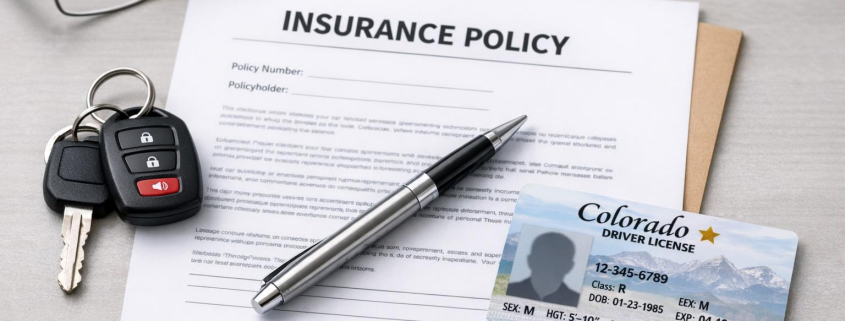
A stock photo showing car keys, an insurance document, and a Colorado driver's license arranged on a table, representing non-owner car insurance in Colorado.

Don’t own a car, but still drive? Colorado can still expect you to be insured.

Non-owner car insurance is a liability policy designed for people who don’t own a vehicle but still drive occasionally—borrowing a friend’s car, renting cars, or staying insured between vehicles. For many Colorado residents (especially during life transitions like moving, selling a car, or navigating license reinstatement), it’s a simple way to stay legal, protect your finances, and avoid costly “coverage gaps” that can raise premiums later.

What is non-owner car insurance (and what it isn’t)?

Non-owner insurance is typically a liability-only auto policy written for a driver who does not own or regularly have access to a vehicle. It’s meant for occasional driving—not for someone who uses the same household car every day.
It usually helps pay for injuries and property damage you cause to others in an at-fault accident. It can also be used in many situations where you need to file an SR-22 but don’t own a car (more on that below).
Not the same as “full coverage.” Non-owner policies typically do not include comprehensive or collision for a vehicle you’re driving, because you don’t own that vehicle.

Who should consider non-owner car insurance in Colorado?

Non-owner coverage can be a strong fit if you:
Borrow cars occasionally (family, friends) but don’t own one
Rent vehicles frequently and want liability protection beyond what a rental company offers
Sold your car and are between vehicles, but want to avoid a lapse in insurance history
• Need proof of insurance for license reinstatement (often with an SR-22 filing)
• Have a teen/young adult who drives occasionally but doesn’t own a car (depending on household setup—this one requires careful review)
When non-owner coverage is usually not appropriate: If you have regular access to a specific vehicle (especially one in your household), insurers may require you to be listed on that vehicle’s policy instead. This is one of the most common (and expensive) misunderstandings we help clients avoid.

Colorado minimum liability limits (and why “minimum” can still be risky)

Colorado requires drivers to carry liability insurance, and the commonly referenced state minimum limits are 25/50/15 (often written as 25,000 / 50,000 / 15,000). That means a policy may pay up to $25,000 for bodily injury per person, $50,000 per accident, and $15,000 for property damage. While these limits can satisfy legal requirements, they may not go far after a serious crash involving medical bills or newer vehicles.
Coverage Part What it helps pay for Colorado “25/50/15” example
Bodily Injury (per person) Injuries you cause to someone else $25,000
Bodily Injury (per accident) Total injury coverage for everyone hurt $50,000
Property Damage Damage you cause to vehicles/property $15,000
A practical approach is choosing limits that match what you’re protecting: your savings, future wages, and your family’s stability. A slightly higher liability limit can be a cost-effective way to reduce worst-case financial risk—especially for parents, households with teen drivers, or anyone frequently driving in high-traffic areas.

Non-owner insurance + SR-22 in Colorado: how it commonly works

An SR-22 isn’t a type of insurance—it’s a state-required filing your insurer submits to the Colorado DMV showing you carry the required liability coverage. If the policy cancels or lapses, the insurer can notify the state, which may trigger additional penalties or a new suspension period.
If you need an SR-22 but don’t own a car, a non-owner policy with an SR-22 filing is often the cleanest solution. It keeps you compliant while you rebuild your driving record, even during a “no car” phase of life.
Important: SR-22 requirements are very specific to your situation (reason for suspension, timeframe, reinstatement steps). If you’re unsure, it’s smart to confirm what Colorado requires before you buy any policy so the filing is done correctly and on time.

What non-owner car insurance typically covers (and common gaps)

Often included:
• Liability for bodily injury and property damage (within your selected limits)
• Option to add certain endorsements in some cases (availability varies by carrier)
Often not included:
• Damage to the car you’re driving (collision/comprehensive)
• Regular-use household vehicles (you may need to be listed on that policy instead)
• Business use driving (delivery/rideshare typically needs separate coverage)
Real-world example: If you borrow a friend’s car and cause an accident, your friend’s policy may be primary. A non-owner policy can help as secondary liability protection, depending on policy language and the situation. This is why reviewing how often you drive and whose vehicles you use matters.

Step-by-step: how to shop for non-owner car insurance in Colorado (without overpaying)

1) Be precise about how often you drive and which cars you use

“Occasional borrowing” is different from “I drive my partner’s car every day.” If you have regular access to a household vehicle, the correct solution is often being listed as a driver on that vehicle’s policy—not a non-owner policy.

2) Pick liability limits that protect your income—not just your registration

Minimum limits may satisfy the law, but they can leave you exposed if injuries are serious. Many families choose higher limits for peace of mind, especially around Denver’s commuting corridors and winter driving conditions.

3) Ask about “lapse” impact if you recently sold your car

Even a short gap in coverage history can sometimes increase your cost later. A non-owner policy may help keep continuous insurance history when you’re between vehicles.

4) If you need an SR-22, confirm the filing details before binding

Make sure the policy is written correctly as non-owner (if appropriate) and that the SR-22 filing is submitted to Colorado in the way the DMV requires. Timing matters—late filings can create expensive setbacks.

5) Compare multiple carriers (this is where independent agents shine)

Non-owner pricing and eligibility can vary widely by company. An independent agency can shop multiple carriers and help you avoid mismatches (like buying non-owner when you actually need a named-driver or owner policy).

Local angle: driving realities around Highlands Ranch

Highlands Ranch drivers often split time between neighborhood errands and higher-speed routes into metro Denver. That mix—plus winter weather, hail seasons, and heavy traffic patterns—can raise the stakes of any at-fault accident. If you’re borrowing cars during a transition (new job, new household, teen driver learning phase, or waiting on a vehicle purchase), non-owner insurance can be a practical bridge that keeps you protected while your situation changes.
If you’re in nearby communities we serve—like Fort Collins, Silverthorne, Winter Park, Breckenridge, Vail, Greeley, or Eaton—we can also help you compare options that reflect local driving conditions and insurer appetites in those areas.

Get a non-owner insurance quote that fits your exact situation

Mountain Storm Insurance is an independent, locally owned agency based in Highlands Ranch. We’ll confirm whether a non-owner policy is truly the right match, help you choose sensible liability limits, and shop multiple carriers for competitive pricing—without the jargon.

FAQ: Non-owner car insurance in Colorado

Does non-owner insurance cover the car I’m driving?

Usually, it covers your liability for injuries and property damage you cause to others. It typically does not pay to repair the vehicle you borrowed. The owner’s policy and any applicable coverages are the place to look for physical damage protection.

If I live with someone who owns a car, can I buy non-owner coverage instead of being listed?

Often, no. If you have regular access to a household vehicle, insurers commonly require you to be listed on that vehicle’s policy. Buying the wrong policy can lead to claim complications later.

Can I get an SR-22 if I don’t own a car?

In many cases, yes—an insurer can file an SR-22 on a non-owner policy. This is common for license reinstatement situations where the state requires proof of liability coverage even without vehicle ownership.

Is non-owner insurance cheaper than a standard auto policy?

Frequently, yes, because it’s typically liability-only and assumes you don’t have daily access to a vehicle. Price still depends on driving history, SR-22 needs, prior coverage, location, and insurer guidelines.

What information do I need to request a non-owner quote?

Your driver’s license details, address history, driving history (tickets/accidents), whether an SR-22 is required, and a clear description of how often you drive and whose vehicles you borrow or rent.

Glossary (plain-English definitions)

Non-owner auto insurance
A liability auto policy for drivers who don’t own a vehicle but still drive occasionally.
Liability coverage
Coverage that helps pay for injuries and property damage you cause to others in an at-fault accident.
25/50/15
A common way to express liability limits (per person/per accident/property damage). In Colorado, these limits are widely referenced as the minimum required amounts.
SR-22
A form filed by an insurer with the state to prove you carry required liability insurance, often after a license suspension or certain violations.
Coverage lapse
A gap in insurance history (no active policy). Even short lapses can sometimes increase rates later.
Stock photo of a hail-damaged car with dents and a cracked windshield in a Colorado neighborhood, captured after a storm with wet pavement and cloudy skies.

A practical guide for Highlands Ranch drivers heading into hail season

If you drive in Colorado, hail isn’t a “maybe.” It’s a when. The tricky part is that many drivers don’t find out what their policy really does (or doesn’t) cover until they’re standing next to a dimpled hood or staring through a spiderwebbed windshield.

Below is a plain-English breakdown of hail damage car insurance in Colorado: which coverage pays, how deductibles work, what happens with glass claims, and the steps that help you move faster (and spend less) after the next storm.

What insurance covers hail damage to your car?

Hail is considered a non-collision event. In most standard personal auto policies, hail damage is handled under comprehensive coverage (sometimes called “other-than-collision”). Comprehensive is also the coverage that usually applies to theft, vandalism, falling objects, fire, and many weather losses. If you don’t carry comprehensive coverage, hail damage to your vehicle is typically not covered.

Quick coverage check (common scenarios)

What happened? Usually covered by Typical out-of-pocket? Notes
Hail dents hood/roof/trunk Comprehensive Your comp deductible Paintless dent repair (PDR) is often used if paint isn’t cracked.
Windshield cracks from hail Comprehensive (glass may be special) Often your comp deductible (varies) Some policies offer separate glass options or repair-first programs.
You skid in a storm and hit a curb Collision Your collision deductible Even though weather contributed, it’s still a collision loss.
Hail damages your car, but you only have liability Not covered Full repair cost Consider comp if hail risk is a concern.
Coverage always depends on your policy language and endorsements. If you’re unsure what you carry, your declarations page (the “dec page”) tells you quickly.

Deductibles: the #1 reason hail claims feel confusing

If your vehicle is insured with comprehensive coverage, you’ll have a comprehensive deductible (commonly $250, $500, $1,000, or higher). That deductible is the part you pay before the insurer pays the remaining covered amount.

A realistic example

Hail repair estimate: $3,200. Your comprehensive deductible: $1,000. If the claim is covered, you typically pay $1,000 and insurance covers the remaining $2,200 (subject to policy terms and settlement method).

Important: When storms hit the Front Range, some carriers place temporary restrictions on changing physical damage deductibles (or adding coverage) while severe weather watches/warnings are active. That’s one reason it pays to review coverage before peak hail months.

Glass claims in Colorado: repairs, replacements, and “free windshield” myths

Many Colorado drivers have heard that windshield replacement is “free” or “required by law.” In reality, Colorado does not have a statewide law that forces insurers to offer zero-deductible windshield replacement on every policy. Whether you pay a deductible depends on your carrier, your policy, and any glass-specific options you selected.

Practical takeaway: treat windshield coverage as something you should verify, not assume. Ask two specific questions:

  1. If my windshield is damaged by hail, does it fall under comprehensive—and does my comprehensive deductible apply?
  2. Do I have any separate glass endorsement, repair waiver, or deductible reduction for glass?

If you commute on C-470, I-25, or travel into the foothills often, glass coverage can be one of the most “felt” parts of your policy because small chips can spread quickly with Colorado temperature swings.

Did you know? Quick hail facts that matter for claims

Severe hail starts at 1 inch
The National Weather Service generally issues a severe thunderstorm warning when hail is 1 inch or larger (or winds are 58 mph+). That’s big enough to crack glass and dent panels.
Colorado’s hail season has a predictable window
Colorado’s “typical” severe hail season is often described as running from mid-April to mid-August, with frequent activity in late spring and early summer.
Comprehensive vs. collision is a real cost lever
Hail losses are commonly handled under comprehensive. If your comp deductible is high, you may “feel” hail losses more than you expect.

Step-by-step: What to do after hail damages your car

1) Document the damage the same day

Take clear photos in good lighting: wide shots (whole vehicle), close-ups (each panel), and the windshield from inside and outside. If you can, capture a brief video walk-around. Keep a note of where the vehicle was parked and roughly when the storm hit.

2) Confirm which deductible applies

Most hail claims route to comprehensive, but glass can be handled differently depending on the policy. Before scheduling repairs, confirm whether your deductible is waived, reduced, or fully applied.

3) Choose the right repair method (PDR vs. body shop)

If hail dents didn’t crack paint, paintless dent repair is often the preferred method because it preserves factory finish and may be faster. If paint is broken or panels are stretched, traditional body work may be needed.

4) Watch for “too good to be true” offers

After big storms, pop-up vendors can appear quickly. Be cautious with offers that promise to “cover your deductible” in ways that don’t make sense or pressure you to sign over payment rights without clear terms. If something feels off, pause and ask your agent to review the plan.

5) Ask about timelines and rental coverage

If your vehicle is not safely drivable (for example, visibility issues from windshield damage), ask whether you have rental reimbursement and what daily/total limits apply. Scheduling can tighten quickly after widespread hail.

Highlands Ranch local angle: why preparation matters here

Highlands Ranch sits right in the wider Front Range corridor where spring and early summer storms can build fast. When hail hits Douglas County and the south Denver metro, the practical challenge isn’t just the storm—it’s the surge: body shops book out, glass vendors get slammed, and claim volume can slow down inspections.

A quick “before the next warning” checklist

  • Review your comprehensive deductible and decide if it still fits your budget.
  • Confirm whether you have any glass-specific option or windshield deductible waiver.
  • If you lease/finance, make sure you carry comprehensive + collision as required by the lender.
  • Keep your insurer/agent contact info saved so you’re not searching during a storm.

Want a quick coverage check? You can also explore our Auto & Vehicle Insurance page for an overview of how we help drivers match coverage to Colorado’s real-world risks.

CTA: Make sure your policy is ready for hail season

Mountain Storm Insurance is an independent, locally owned agency based in Highlands Ranch. We can compare options from multiple carriers and help you understand what “hail coverage” really means on your specific policy—especially your comprehensive deductible and glass coverage.

FAQ: Hail damage car insurance in Colorado

Will my rates go up if I file a hail claim?

It depends on your carrier and your overall rating factors. Hail is typically treated as a comprehensive (non-collision) claim, which is often rated differently than at-fault accidents. The safest approach is to ask how your specific carrier handles comprehensive claims and consider the claim amount relative to your deductible.

If my car has hail dents but still drives fine, should I file a claim?

Consider (1) the repair cost versus your deductible, (2) whether the damage affects resale value, and (3) whether you have a lease return standard to meet. If the estimate is only slightly above your deductible, you may prefer to handle it out of pocket.

Does liability-only insurance cover hail damage?

No. Liability coverage pays for injuries and damage you cause to others. Hail damage to your own vehicle is usually covered only if you carry comprehensive coverage.

Is windshield replacement “free” in Colorado?

Not automatically. Some policies may offer glass-friendly options, but there’s no blanket statewide rule that guarantees zero-deductible windshield replacement for every driver. Check your declarations page and ask your agent how glass is handled under your plan.

What if hail damages both my roof at home and my car?

Those are usually separate claims under separate policies (homeowners for the home, auto for the vehicle). If you want to reduce coordination stress, bundling can help—just make sure both policies have deductibles you can comfortably handle during the same season. If you need both, see our Property Insurance overview as well.

Glossary (helpful hail-claim terms)

Comprehensive coverage
Auto coverage that typically pays for non-collision losses like hail, theft, vandalism, and certain weather events (subject to your policy).
Collision coverage
Coverage that typically pays when your vehicle is damaged in a collision with another vehicle or object (subject to your collision deductible).
Deductible
The amount you pay out of pocket on a covered claim before the insurer pays the remaining covered amount.
PDR (Paintless Dent Repair)
A repair method that removes dents without repainting, often used for hail when paint isn’t cracked.
Declarations page (“Dec page”)
The summary page of your policy listing your coverages, limits, deductibles, vehicles/insureds, and effective dates.

If you’d like a quick review focused on hail damage car insurance in Colorado—especially comprehensive deductibles and windshield coverage—visit our Request a Quote page and we’ll help you sort the details before the next storm rolls through.

Close-up stock photo of a car windshield with a chip and hailstones on the hood, outdoors in a Colorado suburb with stormy spring sky.

A practical guide for Highlands Ranch drivers who want clear answers before the next storm

Colorado’s Front Range sits in “Hail Alley,” and the damaging season typically ramps up mid-April and runs into late summer. For many Highlands Ranch households, it’s not a question of if a windshield will chip or crack—it’s when. The frustrating part is that “windshield replacement insurance” can mean very different things depending on your policy: comprehensive vs. collision, glass endorsements, deductible rules, and whether advanced safety systems need recalibration.

Below is a straightforward breakdown of what most Colorado drivers need to know, the decisions that actually affect out-of-pocket costs, and how to handle a claim without getting steered into a solution that doesn’t fit your vehicle or budget.

How windshield replacement is covered in Colorado (and what “glass coverage” really means)

Most windshield claims fall under comprehensive coverage (sometimes called “other than collision”). Comprehensive is typically the part of an auto policy that addresses non-collision events such as hail, flying debris, vandalism, or theft-related damage.

Quick rule of thumb
Hail/rock chip/flying debris: usually comprehensive
Crash impact (you hit something or something hits you in a collision): usually collision

Many drivers hear “full glass” or “$0 glass” and assume it’s required or automatic. In Colorado, it’s common for insurers to offer optional glass coverage (or a separate glass deductible), but it is not universally included by default. The details live on your declarations page—where you’ll see your comprehensive deductible and any specific glass options you elected.

Deductibles: the #1 reason a “covered windshield” still costs money

A windshield can be “covered” and still require you to pay your deductible. In practice, your out-of-pocket cost usually comes down to these three items:

What you have What it usually means Typical out-of-pocket
Comprehensive coverage (standard) Windshield damage is usually eligible, subject to your comp deductible. Your comp deductible (often $250–$1,000+)
Separate “glass deductible” endorsement Some policies set a lower deductible specifically for glass. Lower fixed amount (example: $0 or $100)
No comprehensive coverage Most non-collision glass damage won’t be paid by the policy. Likely full cost of repair/replacement

One more important Colorado-specific note: insurers (and repair vendors) are not allowed to rebate or refund your deductible as an “incentive” to use a particular shop. If someone’s advertising “we’ll waive your deductible,” that should be treated as a red flag and verified carefully. Colorado law restricts deductible rebates tied to glass repair/replacement.

Repair vs. replacement: when a chip can be fixed (and why it matters)

If you catch damage early, a chip repair may be possible. Repairing a chip can help prevent a spider-crack that turns into a full replacement, especially with Colorado temperature swings and spring hail.

Common reasons replacement is required
• The crack extends across the glass or continues growing
• Damage is in the driver’s primary line of sight
• Damage is near the edge (structural integrity concerns)

Coverage can differ between repair and replacement, depending on your carrier and endorsement choices. If your goal is minimizing out-of-pocket cost, the best move is to confirm your deductible and ask whether your policy treats repair differently than replacement.

Modern vehicles and ADAS: calibration costs you don’t want to discover after the fact

Many newer vehicles have cameras and sensors mounted to or near the windshield that support Advanced Driver Assistance Systems (ADAS)—features like lane-keeping assist, forward collision warnings, and adaptive cruise control.

If the windshield is replaced, those systems may require calibration to ensure safety features work correctly. This is where surprise costs can show up if it’s not handled correctly from the beginning. When you’re comparing quotes or deciding whether to file a claim, always ask:

• Does my vehicle require ADAS calibration after replacement?
• Is calibration included in the repair facility’s process and documentation?
• Will my policy treat calibration as part of the covered windshield loss?
• Will OEM glass be required or recommended for sensor/camera performance?

Step-by-step: how to file a windshield claim in Colorado without headaches

1) Confirm the coverage type and deductible before scheduling

Check your declarations page (or ask your agent) for: comprehensive deductible, any glass endorsement, and whether the policy lists a separate glass deductible.

2) Document the damage right away

Take photos from inside and outside the vehicle, including a wider shot showing the location on the windshield. If hail caused the damage, note the approximate time and place.

3) Ask about ADAS calibration (even if the crack looks “simple”)

Many windshields are no longer “just glass.” Confirm whether calibration is required and how it will be handled.

4) Clarify parts and workmanship expectations

Ask what glass is being installed (OEM vs. aftermarket), what warranty is provided, and whether the shop documents calibration results when applicable.

5) Keep claim and invoice records

Save the invoice, claim number, and any calibration documentation. If you sell the car later, paperwork can help support the vehicle’s maintenance history.

Highlands Ranch hail-season angle: what to review in April before storms start stacking up

April is when many Front Range drivers begin to see the first meaningful hail events. If you’re reviewing coverage now, focus on what actually changes your financial outcome:

Comprehensive deductible: If it’s $1,000–$2,500, a windshield claim may not make sense unless replacement and calibration costs clearly exceed it.
Glass endorsement option: If available, a lower glass deductible can be a practical fit in hail-prone areas.
Vehicle tech level: If your windshield integrates cameras/sensors, plan for calibration questions up front.
Garaging and commute realities: If you park outdoors at work or commute I-25 / C-470 corridors regularly, your exposure is different than a weekend-only vehicle.

If you want help translating your current declarations page into plain English, an independent agency can compare multiple carrier options and show what changes (and what doesn’t) when you adjust deductibles or add glass coverage.

Request a quote that fits Colorado hail reality (not a one-size-fits-all policy)

Mountain Storm Insurance helps Highlands Ranch drivers compare carriers and tailor deductibles and glass options around real-world risk—especially heading into hail season. If you’re trying to reduce surprise windshield expenses, we’ll review your current setup and show clear trade-offs before you switch.

FAQ: Windshield replacement insurance in Colorado

Does Colorado require free windshield replacement (zero deductible)?
Colorado policies commonly cover windshield damage under comprehensive, but zero-deductible replacement is not automatically guaranteed. Many insurers offer optional glass coverage or a separate glass deductible—your declarations page is the fastest way to confirm what you have.
If I have a $1,000 comprehensive deductible, should I even file a claim?
Sometimes yes, sometimes no. If your replacement plus required ADAS calibration is significantly above your deductible, filing can make financial sense. If the total cost is near or below your deductible, paying out of pocket can be simpler.
Will insurance pay for ADAS calibration after windshield replacement?
Often it can be covered as part of the windshield claim when replacement is covered, but it depends on your carrier and claim handling. Confirm coverage and documentation requirements before work begins.
Is chip repair treated differently than replacement?
It can be. Some policies handle repair more favorably than replacement, and some carriers encourage repair to prevent larger losses. Always confirm how your policy applies deductibles to repair vs. replacement.
Can a glass shop “waive my deductible” in Colorado?
Be cautious. Colorado restricts deductible rebates offered as an inducement tied to glass repair/replacement. If you see this advertised, verify details with your insurer and agent so you don’t end up responsible for unexpected costs or claim complications.

Glossary (quick definitions)

Comprehensive coverage
Auto coverage that typically applies to non-collision events like hail, vandalism, theft, and flying debris damage (subject to your deductible).
Deductible
The amount you pay out of pocket before insurance pays the remaining covered cost.
Glass endorsement / glass deductible
An optional policy feature that may set a different (often lower) deductible for windshield/glass claims than your standard comprehensive deductible.
OEM glass
Original Equipment Manufacturer glass—made to the same specifications as the glass installed at the factory (terminology and availability vary by vehicle and carrier rules).
ADAS calibration
The process of aligning and verifying cameras/sensors (often mounted near the windshield) so safety systems function correctly after a windshield replacement.
Real-Life Colorado Lawsuits That Umbrella Insurance Can Help Cover

For many Colorado residents, liability insurance feels abstract—something you hope you never need. Unfortunately, lawsuits don’t just happen to reckless people or businesses cutting corners. They happen to ordinary homeowners, drivers, and families who find themselves in the wrong situation at the wrong time. At MountainStorm Insurance, we see firsthand how quickly a single incident can escalate into a lawsuit that threatens savings, property, and future income.

Umbrella insurance exists precisely for these moments. It provides additional liability coverage when standard auto, homeowners, or rental policies reach their limits. What makes umbrella coverage especially valuable is that it protects against real-world scenarios that occur every day across Colorado—not rare or extreme edge cases.

This article walks through common Colorado liability scenarios where umbrella insurance can make the difference between financial survival and long-term damage. These examples are not hypothetical—they reflect the types of claims insurers, attorneys, and courts handle regularly.

Why Real-Life Scenarios Matter More Than Policy Language

Insurance policies are full of technical terms, limits, and exclusions. While those details matter, most people understand risk best through situations they can picture. Umbrella insurance often seems unnecessary until you see how quickly standard limits can be exhausted in everyday incidents.

Colorado’s growing population, rising medical costs, and active lifestyle create a legal environment where lawsuits are increasingly common and expensive. Understanding how umbrella insurance responds in real situations helps clarify why this coverage is becoming essential for many households.

Auto Accidents With Serious Injuries

Auto accidents are the most common source of high-dollar liability claims in Colorado. Even careful drivers can be involved in severe accidents due to weather, road conditions, or other drivers’ actions.

Consider a multi-vehicle collision on I-25 or I-70 during winter conditions. If several people are injured, medical costs alone can exceed $1 million. Standard auto liability limits—often $250,000 or $500,000—may be exhausted quickly.

Once those limits are reached, the injured parties may pursue the at-fault driver personally. This can include claims against savings, home equity, and even future wages. An umbrella policy can step in after auto insurance limits are exhausted, covering additional damages and legal defense costs.

Without umbrella coverage, even a single accident can permanently alter a family’s financial future.

Teen Drivers and Household Liability

Households with teenage or young adult drivers face elevated liability risk. Inexperience, distractions, and peer pressure increase the likelihood of serious accidents.

In Colorado, parents can be held financially responsible for accidents caused by drivers in their household. Even if the vehicle is insured, liability limits may not be sufficient when injuries are severe.

Umbrella insurance adds an extra layer of protection for families, ensuring that one mistake by a young driver doesn’t undo years of financial planning.

Rental Property and Short-Term Rental Lawsuits

Colorado’s rental market—including long-term rentals and short-term vacation properties—creates significant liability exposure for property owners.

If a tenant or guest is injured due to a slip-and-fall, stair failure, railing collapse, or other property-related issue, the property owner may face a lawsuit. Medical costs, lost income, and pain-and-suffering claims can quickly exceed standard landlord or homeowners’ liability limits.

Short-term rentals add another layer of risk. Higher guest turnover increases the chance of accidents, and plaintiffs may pursue larger settlements when properties are perceived as income-generating assets.

Umbrella insurance can help cover excess liability beyond underlying rental or homeowners policies, protecting property owners from catastrophic financial loss.

Dog Bites and Animal Liability Claims

Dog bites are a surprisingly common source of liability lawsuits in Colorado. Even well-trained pets can behave unpredictably, especially in unfamiliar or stressful situations.

Medical treatment for dog bites can be extensive, particularly if reconstructive surgery or infection treatment is required. Claims often include medical expenses, emotional distress, and scarring.

Many homeowners policies provide limited coverage for animal liability, and some impose breed restrictions or exclusions. If a claim exceeds those limits, an umbrella policy may provide additional protection—depending on policy terms.

For pet owners, umbrella insurance can be a critical safeguard against unexpected liability.

Injuries to Guests on Your Property

Homeowners are legally responsible for maintaining reasonably safe conditions on their property. If a guest slips on icy steps, trips over uneven walkways, or is injured by a falling object, the homeowner may be liable.

Colorado’s winter conditions increase the risk of slip-and-fall accidents. Snow and ice create hazards that can lead to serious injuries, especially for older guests.

When injuries are severe, claims often exceed standard homeowners’ liability limits. Umbrella insurance helps cover additional damages and legal costs, protecting homeowners from personal financial exposure.

Recreational Vehicle and Outdoor Activity Accidents

Colorado’s outdoor lifestyle includes boats, ATVs, snowmobiles, and other recreational vehicles. These activities carry inherent risk, even when used responsibly.

Accidents involving recreational vehicles can result in serious injuries, particularly when passengers or bystanders are involved. Liability claims may include medical costs, long-term care, and lost income.

Standard policies may provide limited coverage for recreational vehicles, and liability limits may be lower than homeowners realize. Umbrella insurance can extend coverage for qualifying recreational activities, offering broader protection.

Defamation, Libel, and Personal Injury Claims

Umbrella insurance may also help cover certain personal injury claims, such as defamation, libel, or slander, depending on the policy.

In today’s digital environment, disputes can escalate quickly. Social media posts, online reviews, or public statements can lead to lawsuits alleging reputational harm or emotional distress.

Legal defense costs alone can be substantial, even if the claim is ultimately resolved without a large settlement. Umbrella insurance can help cover these costs once underlying limits are exhausted.

Lawsuits Involving Guests or Social Events

Hosting events at your home—such as parties, gatherings, or celebrations—can increase liability exposure. Alcohol-related incidents, accidental injuries, or property damage involving guests can lead to lawsuits.

If a guest leaves your home intoxicated and causes an accident, or if someone is injured during the event, liability may extend back to the host. Standard homeowners policies may not provide sufficient coverage in these situations.

Umbrella insurance provides an added layer of protection when social situations turn into legal claims.

Why Lawsuits Often Exceed Standard Policy Limits

Many people assume their liability limits are high enough because claims seem unlikely. The reality is that lawsuits often involve more than immediate medical bills.

Claims may include:

  • Ongoing medical care and rehabilitation
  • Lost wages or diminished earning capacity
  • Pain and suffering
  • Emotional distress
  • Legal fees and court costs

These factors quickly push total damages beyond standard policy limits, even in cases that begin with seemingly minor incidents.

How Umbrella Insurance Handles Legal Defense

One of the most valuable aspects of umbrella insurance is legal defense coverage. When a covered claim exceeds underlying limits, the umbrella policy often provides additional defense resources.

This includes attorney fees, court costs, and settlement negotiations. Without umbrella coverage, legal defense expenses alone can be financially devastating—even before any settlement or judgment is reached.

Umbrella insurance shifts that burden away from the policyholder and onto the insurer.

Why Colorado’s Legal Environment Makes Umbrella Coverage Important

Colorado law allows plaintiffs to pursue damages beyond insurance limits. If coverage falls short, personal assets and future income may be at risk.

Rising healthcare costs, increased litigation, and higher jury awards have made large liability claims more common. Umbrella insurance reflects this reality by providing affordable protection against high-impact events.

What Umbrella Insurance Typically Does Not Cover

While umbrella insurance is broad, it does not cover everything. Intentional acts, criminal behavior, and most business-related activities are excluded unless specifically endorsed.

This is why umbrella coverage should be reviewed as part of a broader insurance strategy, ensuring personal and commercial exposures are addressed appropriately.

How MountainStorm Insurance Helps Clients Understand Real Risk

MountainStorm Insurance takes a practical, scenario-based approach to umbrella insurance. Rather than focusing solely on policy limits, clients are guided through real-world exposures that apply to their lifestyle, property, and activities.

This approach helps clients understand why umbrella coverage matters—not just that it exists. The result is more confident decision-making and better long-term protection.

Frequently Asked Questions

Do umbrella policies really pay out on claims?

Yes. Umbrella insurance regularly responds to high-dollar liability claims when underlying limits are exceeded.

Is umbrella insurance only for wealthy people?

No. Anyone with assets, income, or liability exposure can benefit.

Can umbrella insurance cover multiple incidents?

Yes, up to the policy limit during the policy period.

Does umbrella insurance cover legal fees?

Often yes, once underlying policy limits are exhausted.

Is umbrella insurance expensive?

Compared to the protection it provides, umbrella insurance is typically very affordable.

Real-life lawsuits in Colorado don’t just affect corporations or reckless individuals. They affect everyday drivers, homeowners, pet owners, landlords, and families enjoying the Colorado lifestyle. In many cases, the difference between financial recovery and long-term hardship comes down to whether umbrella insurance was in place.

Umbrella insurance provides a powerful, cost-effective layer of protection against the kinds of liability claims that standard policies were never designed to handle alone. By understanding how umbrella coverage applies in real-world scenarios, Colorado residents can make informed decisions that protect what they’ve worked hard to build.

If you want to understand how umbrella insurance applies to your specific risks, MountainStorm Insurance can help you evaluate your exposure and determine whether additional liability coverage makes sense for your situation.

Full Coverage vs Liability Insurance in Colorado: Which Do You Need?

Choosing between full coverage and liability insurance in Colorado is one of the most important decisions drivers make when buying auto insurance. The choice affects not only your monthly premium, but also how protected you are financially after an accident, a hailstorm, or an unexpected loss. At MountainStorm Insurance, many Colorado drivers ask this question because they want to save money without exposing themselves to unnecessary risk.

Colorado auto insurance laws only require liability coverage, but that does not mean liability-only insurance is the right choice for every driver. Full coverage and liability insurance serve very different purposes, and understanding how each works in real-world scenarios can help you choose wisely based on your vehicle, finances, and risk tolerance.

What Liability Insurance Covers in Colorado

Liability insurance is the foundation of every auto insurance policy in Colorado. It is also the only coverage required by state law. Colorado is an at-fault state, meaning the driver who causes an accident is financially responsible for the resulting damages.

Colorado’s minimum liability requirements are:

  • $25,000 for bodily injury or death to one person
  • $50,000 for bodily injury or death per accident
  • $15,000 for property damage per accident

Liability insurance pays for injuries and property damage you cause to others. It also covers legal defense costs if you are sued, up to your policy limits.

Liability insurance does not pay for:

  • Damage to your own vehicle
  • Your own medical bills
  • Theft, hail, vandalism, or animal collisions
  • Damage caused by uninsured or underinsured drivers

From firsthand experience, many drivers believe liability insurance covers “the basics,” including their own car. In reality, liability-only policies protect other people, not you.

What Full Coverage Means in Colorado

“Full coverage” is not a legal term, but it is commonly used to describe a policy that includes liability insurance plus physical damage coverage for your own vehicle. In Colorado, full coverage typically includes:

  • Liability insurance
  • Collision coverage
  • Comprehensive coverage

Collision coverage pays for damage to your vehicle if you hit another car or object, regardless of fault. Comprehensive coverage pays for non-collision losses such as hail, theft, vandalism, fire, falling objects, and animal strikes.

Many full coverage policies also include optional protections such as uninsured and underinsured motorist coverage and medical payments coverage, which further expand protection.

If your vehicle is financed or leased, your lender will almost always require full coverage until the loan is paid off.

Key Differences Between Liability and Full Coverage

The main difference between liability insurance and full coverage comes down to who and what is protected.

Liability insurance protects:

  • Other drivers and their passengers
  • Other people’s property
  • Your legal responsibility

Full coverage protects:

  • Other people (through liability coverage)
  • Your own vehicle
  • You against common Colorado risks like hail and theft

While liability-only insurance has lower monthly premiums, it shifts most financial risk onto the driver. Full coverage costs more upfront but significantly reduces out-of-pocket expenses after a loss.

Real-World Scenarios: Liability vs Full Coverage

Understanding coverage differences is easier when looking at real-world situations Colorado drivers frequently experience.

  • If you cause a rear-end accident in Denver, liability insurance will pay for the other driver’s injuries and vehicle repairs. However, repairs to your own vehicle will come entirely out of pocket unless you have collision coverage.
  • If a hailstorm damages your car in Colorado Springs, liability insurance provides no coverage at all. Comprehensive coverage under a full coverage policy would typically pay for repairs or replacement, minus your deductible.
  • If a deer runs into your vehicle on a mountain highway, liability insurance does not apply. Comprehensive coverage would cover the damage.
  • If your car is stolen or vandalized, liability insurance offers no protection. Comprehensive coverage is what pays in these situations.

From real claims experience, many drivers with liability-only insurance are surprised by how many common losses are excluded. If you ever need assistance after a covered loss, you can review our guide on how to file a claim.

When Liability Insurance May Be Enough

There are situations where liability-only insurance can make sense. Drivers with older vehicles that have very low market value may decide that full coverage is not cost-effective.

Liability insurance may be reasonable if:

  • Your vehicle is paid off and worth very little
  • You could afford to replace the vehicle out of pocket
  • You primarily want to meet legal requirements
  • You are comfortable accepting more financial risk

Even in these cases, higher liability limits are often recommended. Colorado’s minimum limits can be exhausted quickly, and liability claims can affect savings, wages, and assets.

When Full Coverage Is Usually the Better Choice

Full coverage is often the better option for drivers who want to protect their vehicle and reduce financial risk.

Full coverage is usually recommended if:

  • Your vehicle is financed or leased
  • Your car has significant market value
  • You rely on your vehicle for work or daily life
  • You live in areas prone to hail or theft
  • You want predictable costs after a loss

In Colorado, comprehensive coverage is especially valuable due to frequent hailstorms. According to the National Weather Service, Colorado experiences some of the most damaging hail events in the country, leading to widespread vehicle losses each year.

How Cost Differences Really Compare

Many drivers assume full coverage is dramatically more expensive than liability insurance. In reality, the difference is often smaller than expected, especially when deductibles are adjusted.

Factors that influence the price difference include:

  • Vehicle value and repair costs
  • Deductible amounts
  • Driver history and location
  • Available discounts

From experience, raising deductibles on collision and comprehensive coverage can significantly reduce premiums while still preserving protection against major losses.

Colorado-Specific Risks That Influence This Decision

Colorado’s climate and geography play a major role in determining whether full coverage is worth it. Winter storms increase accident severity, mountain roads increase collision risk, and hailstorms create widespread comprehensive claims.

Wildlife collisions are also common across rural and mountain areas. Without comprehensive coverage, these losses fall entirely on the driver.

Urban areas face higher theft and vandalism rates, making comprehensive coverage more valuable for city drivers.

How Liability Limits Fit Into the Decision

Even drivers choosing liability-only insurance should carefully consider liability limits. Minimum limits meet legal requirements, but they often do not provide adequate financial protection.

Many professionals recommend liability limits of at least 100/300/100, even if you skip collision and comprehensive coverage. Higher limits protect savings, home equity, and future income if you cause a serious accident.

The cost difference between minimum limits and higher limits is often modest compared to the protection gained. For additional fundamentals, visit our Insurance 101 resource page.

Full Coverage, Affordability, and Smart Adjustments

Choosing full coverage does not mean paying the highest possible premium. Many drivers reduce costs without sacrificing protection by:

  • Raising deductibles
  • Bundling auto insurance with home or renters insurance
  • Maintaining a clean driving record
  • Choosing vehicles with lower repair costs
  • Reviewing coverage annually

At MountainStorm Insurance, many drivers discover that small adjustments allow them to keep full coverage while staying within budget. You can request a personalized quote here to compare options based on your situation.

Frequently Asked Questions About Full Coverage vs Liability in Colorado

Is full coverage required by law in Colorado?

No. Colorado only requires liability insurance. Full coverage is optional unless required by a lender.

Can I drop full coverage once my car is paid off?

Yes. Once a vehicle is paid off, you can choose liability-only coverage, though this increases financial risk.

Does liability insurance cover hail damage?

No. Hail damage is covered under comprehensive coverage, which is part of full coverage.

Is full coverage worth it for an older car?

It depends on the vehicle’s value and your ability to pay for repairs or replacement out of pocket.

Can I switch between liability and full coverage later?

Yes. Coverage can be adjusted at renewal or mid-policy, though changes only apply moving forward.

Choosing between full coverage and liability insurance in Colorado is ultimately about balancing cost and risk. Liability insurance meets legal requirements, but it leaves drivers exposed to many common and costly losses. Full coverage costs more upfront, but it provides broader protection that aligns with Colorado’s weather, traffic, and driving conditions. Understanding how each option works in real-world scenarios allows drivers to choose coverage that fits both their budget and their long-term financial security. MountainStorm Insurance helps Colorado drivers evaluate these decisions with clarity, transparency, and practical guidance tailored to real life on Colorado roads.

Personal vs Commercial Umbrella Insurance: What Colorado Policyholders Should Know

Umbrella insurance is often described as “extra liability protection,” but that simple definition hides an important distinction that many Colorado policyholders don’t realize until it’s too late. Not all umbrella policies work the same way, and choosing the wrong type—personal versus commercial—can leave serious gaps in coverage. At MountainStorm Insurance, one of the most common questions we hear is whether a personal umbrella policy is enough or if a commercial umbrella policy is required.

The answer depends on how liability arises in your life or business. Colorado residents frequently blur the line between personal and business activities, especially with side businesses, rental properties, consulting work, or recreational equipment. Understanding the difference between personal and commercial umbrella insurance is essential for protecting assets, income, and long-term financial security.

This guide explains how each type of umbrella insurance works, where they differ, and how Colorado policyholders can determine which solution—or combination—makes sense for their situation.

What Umbrella Insurance Is Designed to Do

At its core, umbrella insurance provides liability coverage above the limits of underlying policies. These underlying policies might include auto insurance, homeowners insurance, general liability insurance, or commercial auto insurance. When a covered claim exceeds those base limits, the umbrella policy steps in to cover the excess.

Umbrella coverage is designed for catastrophic liability events—serious injuries, major property damage, or lawsuits that far exceed standard limits. It often also expands coverage to certain liability scenarios not fully addressed by base policies, depending on the policy terms.

Where personal and commercial umbrella policies differ is in what types of activities they cover and which underlying policies they sit on top of.

What Personal Umbrella Insurance Covers in Colorado

A personal umbrella insurance policy is designed to protect individuals and families from liability arising out of everyday personal activities. It extends coverage beyond personal auto, homeowners, renters, and sometimes recreational vehicle policies.

Personal umbrella insurance in Colorado typically applies to:

  • Auto accidents involving personal vehicles
  • Injuries to guests on your property
  • Dog bites or personal liability incidents
  • Accidents involving boats, ATVs, or recreational vehicles used personally
  • Certain personal injury claims such as libel or slander, depending on the policy

The purpose of a personal umbrella policy is to protect personal assets and future income if a lawsuit exceeds the limits of standard personal policies. For a deeper look at how excess liability works, see why you need umbrella insurance to protect your assets.

For many Colorado households, personal umbrella insurance is the right solution—as long as the exposure is truly personal.

What Personal Umbrella Insurance Does Not Cover

One of the most dangerous misconceptions is assuming a personal umbrella policy will respond to business-related claims. In most cases, it will not.

Personal umbrella insurance generally excludes:

  • Business activities and professional services
  • Claims arising from business-owned vehicles
  • Liability related to employees
  • Commercial rental operations
  • Business contracts and commercial agreements

Even small or part-time business activities can fall outside personal umbrella protection. In Colorado, where side businesses and independent contracting are common, this distinction matters more than many people realize.

What Commercial Umbrella Insurance Covers

Commercial umbrella insurance is designed to extend liability protection for businesses. It sits on top of commercial policies such as general liability, commercial auto, employers’ liability, and professional liability, where applicable.

Commercial umbrella insurance in Colorado typically applies to:

  • Business-related bodily injury or property damage claims
  • Lawsuits involving customers, clients, or vendors
  • Commercial auto accidents
  • Liability involving employees or subcontractors
  • Claims arising from products, services, or operations

Unlike personal umbrella insurance, commercial umbrella coverage is structured around business risk, contracts, and operational exposure. It is often required by lenders, landlords, or clients as part of contractual agreements. Business owners can review broader protection options under business insurance coverage to ensure the umbrella aligns with underlying policies.

Why Personal Umbrella Insurance Is Not a Substitute for Commercial Coverage

A common mistake Colorado policyholders make is relying on a personal umbrella policy to cover business activities—especially when the business is small, home-based, or informal.

For example:

  • A consultant using a personal vehicle for business travel
  • A homeowner renting out a property short-term
  • A contractor doing occasional side jobs
  • A professional offering services under their own name

In these situations, a personal umbrella policy may deny coverage because the claim arises from business activity. Even if the business income is modest, the liability exposure can be significant.

Commercial umbrella insurance exists because business risks are fundamentally different from personal risks. Courts, insurers, and contracts all treat them differently. Home-based entrepreneurs can also review guidance on insuring your home-based business to better understand where personal coverage ends and business exposure begins.

Colorado Scenarios That Often Require Commercial Umbrella Coverage

Colorado’s economy and lifestyle create unique situations where commercial umbrella insurance is necessary, even when policyholders don’t think of themselves as “business owners.”

Rental properties are a major example. Long-term rentals, short-term vacation rentals, and investment properties often require commercial liability coverage and, in many cases, a commercial umbrella policy.

Independent professionals and contractors also face higher exposure. Claims related to advice, services, or job-site accidents can exceed standard limits quickly.

Recreational businesses—such as guiding, instruction, or equipment rental—carry significant liability risk and typically require commercial umbrella coverage to protect against catastrophic claims.

Even nonprofit board service or volunteer leadership roles may create exposure that personal umbrella policies do not fully address.

How Underlying Policy Requirements Differ

Both personal and commercial umbrella policies require specific underlying coverage, but the requirements are not interchangeable.

A personal umbrella policy may require:

  • Certain minimum auto liability limits
  • Specific homeowners’ or renters’ liability limits

A commercial umbrella policy may require:

  • General liability insurance
  • Commercial auto insurance
  • Employers liability coverage
  • Higher minimum limits depending on risk

If the underlying policies do not meet the umbrella carrier’s requirements, coverage may not apply when a claim occurs. This is why proper structuring is critical.

Why Mixed Personal and Business Exposure Creates Gaps

Many Colorado policyholders operate in a gray area between personal and business use. This creates some of the most dangerous insurance gaps.

For example, using a personal vehicle for business deliveries or hosting paying guests at a personal residence can trigger exclusions under personal umbrella policies. Similarly, relying solely on commercial umbrella insurance may leave personal exposures unprotected.

In these cases, a coordinated strategy that includes both personal and commercial umbrella insurance may be necessary.

Cost Differences Between Personal and Commercial Umbrella Insurance

Personal umbrella insurance is typically very affordable relative to the coverage it provides. Many policies offering $1 million in coverage cost only a few hundred dollars per year.

Commercial umbrella insurance is generally more expensive because business risks are higher and claims tend to be more complex. Pricing depends on industry, revenue, number of employees, vehicles, and overall exposure.

However, cost should not be the primary decision factor. The financial consequences of inadequate coverage far outweigh the premium difference.

How Lawsuits Treat Personal vs Business Liability in Colorado

Colorado law distinguishes clearly between personal and business liability. Courts evaluate claims based on the activity involved, not the policyholder’s intent.

If an injury or loss occurs during a business activity, personal insurance policies—including personal umbrella policies—may not apply, regardless of how small or informal the business is.

Commercial umbrella insurance is designed to respond to these claims, including legal defense costs, settlements, and judgments.

How MountainStorm Insurance Helps Clients Choose the Right Umbrella Coverage

MountainStorm Insurance approaches umbrella coverage as a strategic decision, not a checkbox. Each client’s lifestyle, income sources, assets, and activities are reviewed to identify where liability exposure actually exists.

For some clients, a personal umbrella policy is sufficient. For others, commercial umbrella insurance is essential. In many cases, a combination of both provides the most comprehensive protection.

The goal is not to oversell coverage, but to eliminate blind spots that could lead to financial devastation after a single lawsuit.

Common Misconceptions About Umbrella Insurance Types

One common misconception is that small businesses don’t need commercial umbrella insurance. In reality, smaller businesses often have fewer assets to absorb losses and are more vulnerable to lawsuits.

Another misconception is that personal umbrella insurance “covers everything.” It does not. Coverage is defined by activity, not intent.

Finally, many believe umbrella insurance only matters if a claim seems likely. Umbrella coverage is designed for low-probability, high-impact events—exactly the kind that people assume won’t happen to them.

Frequently Asked Questions

Can I have both personal and commercial umbrella insurance?

Yes. Many Colorado policyholders need both to fully protect personal and business exposures.

Does a personal umbrella cover my side business?

Usually no. Business activities are commonly excluded.

Is commercial umbrella insurance only for large companies?

No. Small businesses and independent professionals often need it most.

Do landlords need commercial umbrella insurance?

Often yes, especially for rental or short-term rental properties.

How much umbrella coverage should I carry?

Coverage should reflect assets, income, and risk exposure. Many start at $1 million and adjust upward as needed.

The difference between personal and commercial umbrella insurance is not just technical—it’s financial. In Colorado, where personal and business activities often overlap, choosing the wrong type of umbrella coverage can leave devastating gaps that only appear after a lawsuit has already begun.

Personal umbrella insurance is an essential tool for protecting everyday life. Commercial umbrella insurance is critical for protecting business activities, even small or part-time ones. Understanding which applies to your situation—and structuring coverage accordingly—is one of the most important steps you can take to protect what you’ve built.

If you’re unsure whether your current umbrella coverage truly matches your risk, MountainStorm Insurance can help you evaluate your exposure and design a liability strategy that fits Colorado realities, not assumptions.

Average Cost of Car Insurance in Colorado (By Age & City)

Understanding the average cost of car insurance in Colorado helps drivers set realistic expectations and make better coverage decisions. Many people are surprised to learn how much rates can vary depending on age, where they live, and the type of coverage they choose. At MountainStorm Insurance, drivers across the state often ask why their premium looks so different from a friend’s or neighbor’s, even when they drive similar vehicles. The answer usually comes down to risk factors that insurers evaluate when setting Colorado car insurance rates.

This guide breaks down average auto insurance costs in Colorado, explains why prices differ by age and city, and shows how coverage choices influence what drivers ultimately pay. While averages provide helpful benchmarks, understanding the “why” behind the numbers is what allows drivers to control costs without sacrificing protection.

What Is the Average Cost of Car Insurance in Colorado?

On average, Colorado car insurance rates tend to be higher than the national average. According to industry data from sources such as the National Association of Insurance Commissioners and Quadrant Information Services, Colorado drivers typically pay several hundred dollars more per year than the U.S. average for comparable coverage.

For a full-coverage policy, many Colorado drivers fall into a range of roughly $2,200 to $2,800 per year, depending on personal factors. Minimum liability-only policies are significantly cheaper, often ranging from $700 to $1,000 annually, but they provide far less protection.

These figures are only averages. Some drivers pay far less, while others pay considerably more. Age, city, driving history, vehicle type, and coverage selections all influence where a driver lands within that range.

Why Car Insurance Costs More in Colorado

Several statewide factors contribute to higher auto insurance costs in Colorado. One of the most significant is weather-related claims. According to the National Weather Service, Colorado experiences some of the most frequent and severe hailstorms in the country, leading to extensive insurance losses.

Traffic density along the Front Range also plays a role. Areas such as Denver, Aurora, Lakewood, and Colorado Springs experience higher accident frequency than rural parts of the state. More accidents generally mean higher claims costs, which insurers factor into pricing.

Another contributor is uninsured and underinsured motorists. The Insurance Research Council reports that Colorado consistently ranks above the national average for uninsured drivers. This increases costs for insured drivers, as claims involving uninsured motorists are often more complex and expensive.

Average Car Insurance Cost in Colorado by Age

Age is one of the most influential rating factors in auto insurance pricing. Insurers use age as a proxy for driving experience and risk, which leads to noticeable differences in premiums.

Younger drivers typically pay the highest rates. Teen drivers and drivers in their early 20s have less experience and statistically higher accident rates. As a result, they often see premiums that are double or even triple the state average.

Drivers in their 30s, 40s, and 50s generally enjoy the lowest average rates, assuming they have clean driving records. This age group benefits from experience, stability, and lower claim frequency.

Rates often increase again slightly for senior drivers, particularly after age 70, as insurers account for changes in reaction time, vision, and health.

Typical trends by age include:

  • Teen drivers pay the highest premiums in Colorado
  • Young adults are seeing a steady rate decrease through their late 20s
  • Middle-aged drivers are enjoying the lowest average rates
  • Seniors are experiencing modest increases depending on their driving history

While age matters, it is not the only factor. A safe 22-year-old driver may pay less than a 45-year-old with multiple accidents or violations.

Average Car Insurance Cost in Colorado by City

Location has a major impact on Colorado car insurance rates. Insurers analyze zip-code-level data to assess accident frequency, theft rates, vandalism, and repair costs.

Large metropolitan areas tend to have higher premiums. Denver, for example, typically has some of the highest average auto insurance costs in the state due to congestion, theft rates, and claim frequency. Aurora and Lakewood often follow similar patterns.

Colorado Springs generally sees slightly lower rates than Denver, though still above the state average. Fort Collins and Boulder often fall closer to the middle, while smaller cities and rural areas tend to have lower premiums.

Common factors influencing city-based pricing include:

  • Traffic density and commute patterns
  • Vehicle theft and vandalism rates
  • Average claim severity in the area
  • Repair and labor costs for local body shops

Drivers living in rural or mountain areas may pay less overall, but they often face higher risks from wildlife collisions and winter driving, which can still influence coverage recommendations.

How Coverage Choices Affect Auto Insurance Costs

Coverage selection is one of the few factors drivers can directly control. Two people with identical demographics and vehicles can pay very different premiums based on the coverage they choose.

Minimum liability coverage is the least expensive option, but it only pays for injuries and property damage you cause to others. It does not cover your vehicle, your medical bills, or damage from hail or theft.

Full coverage policies, which typically include collision and comprehensive coverage, cost more upfront but provide far broader protection. In Colorado, comprehensive coverage is particularly valuable due to frequent hailstorms and animal collisions.

Key coverage choices that affect cost include:

  • Liability limits (higher limits increase premiums but reduce financial risk)
  • Collision and comprehensive deductibles
  • Uninsured and underinsured motorist coverage
  • Medical payments coverage limits

Drivers who want to better understand how auto coverage works can explore the basics of vehicle insurance coverage options before adjusting their policy.

From firsthand experience, many drivers can reduce premiums by adjusting deductibles rather than dropping important coverage entirely.

Why Averages Don’t Tell the Whole Story

Average car insurance costs are useful benchmarks, but they rarely reflect what an individual driver will pay. Two drivers of the same age in the same city can have dramatically different rates based on driving record, credit-based insurance score, and coverage structure.

Insurance companies also weigh continuous insurance history. Drivers with lapses in coverage often pay more than those who have maintained uninterrupted policies, even if everything else is equal.

This is why comparing quotes based on your own information is far more effective than relying solely on statewide averages.

How to Use Average Rates to Your Advantage

Understanding average Colorado auto insurance costs can help drivers spot red flags. If your premium is far above the average for your age and city, it may be worth reviewing your policy for potential savings opportunities.

Ways drivers often bring costs closer to or below average include:

  • Shopping policies every one to two years
  • Bundling auto insurance with home or renters insurance
  • Improving credit-related factors over time
  • Choosing vehicles that are cheaper to insure
  • Adjusting deductibles instead of cutting coverage

Many Colorado families also find additional savings opportunities by reviewing bundling strategies like those discussed in why Highlands Ranch families should bundle insurance policies.

At MountainStorm Insurance, many drivers discover that small changes can make a noticeable difference without increasing risk.

Colorado-Specific Risks That Influence Pricing

Colorado’s environment creates unique insurance challenges. Winter weather increases accident severity, while hailstorms drive up comprehensive claims. Wildlife collisions are common in both rural and mountain areas.

These risks explain why Colorado car insurance rates are higher than average and why extremely low premiums often come with trade-offs. Coverage choices should reflect these realities rather than relying solely on averages.

Drivers who want a broader understanding of how policies work across coverage types can review helpful resources in the company’s Insurance 101 guide.

Frequently Asked Questions About Car Insurance Costs in Colorado

What is the average cost of car insurance in Colorado?

Colorado drivers often pay more than the national average, with full coverage commonly ranging between $2,200 and $2,800 per year.

Why does car insurance cost more in Denver than in smaller cities?

Higher traffic density, theft rates, and accident frequency drive up claims costs in large metro areas.

Do younger drivers always pay more for car insurance?

Generally, yes, but clean driving records and good coverage choices can help reduce costs over time.

Is minimum coverage cheaper than full coverage?

Yes, but minimum coverage offers limited protection and may lead to higher out-of-pocket costs after a claim.

Can my rate be higher than the average and still be normal?

Yes. Averages do not account for personal driving history, vehicle type, or coverage choices.

Average car insurance costs in Colorado provide a helpful starting point, but they are only part of the picture. Rates vary widely by age, city, and coverage decisions, and understanding these differences gives drivers more control over what they pay. In a state with unique weather and driving risks, the most effective approach is balancing affordability with protection that reflects real-world conditions. MountainStorm Insurance helps Colorado drivers interpret the numbers, compare options, and choose coverage that makes sense for both their budget and long-term security.