A practical guide for Highlands Ranch drivers heading into hail season
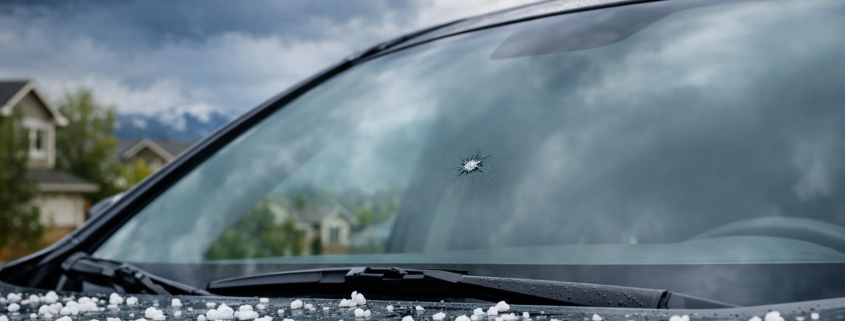
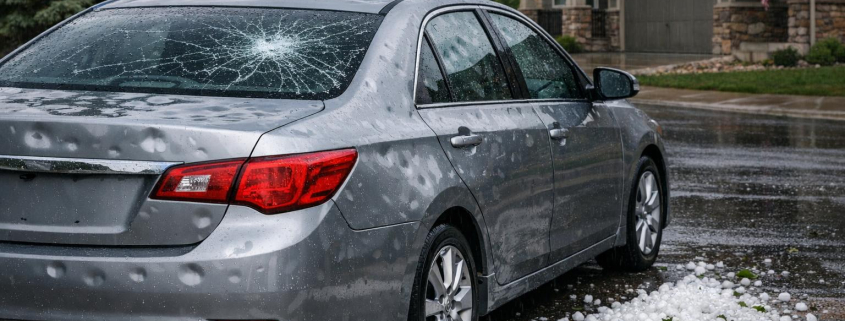
If you drive in Colorado, hail isn’t a “maybe.” It’s a when. The tricky part is that many drivers don’t find out what their policy really does (or doesn’t) cover until they’re standing next to a dimpled hood or staring through a spiderwebbed windshield.
Below is a plain-English breakdown of hail damage car insurance in Colorado: which coverage pays, how deductibles work, what happens with glass claims, and the steps that help you move faster (and spend less) after the next storm.
What insurance covers hail damage to your car?
Hail is considered a non-collision event. In most standard personal auto policies, hail damage is handled under comprehensive coverage (sometimes called “other-than-collision”). Comprehensive is also the coverage that usually applies to theft, vandalism, falling objects, fire, and many weather losses. If you don’t carry comprehensive coverage, hail damage to your vehicle is typically not covered.
Quick coverage check (common scenarios)
| What happened? | Usually covered by | Typical out-of-pocket? | Notes |
|---|---|---|---|
| Hail dents hood/roof/trunk | Comprehensive | Your comp deductible | Paintless dent repair (PDR) is often used if paint isn’t cracked. |
| Windshield cracks from hail | Comprehensive (glass may be special) | Often your comp deductible (varies) | Some policies offer separate glass options or repair-first programs. |
| You skid in a storm and hit a curb | Collision | Your collision deductible | Even though weather contributed, it’s still a collision loss. |
| Hail damages your car, but you only have liability | Not covered | Full repair cost | Consider comp if hail risk is a concern. |
Deductibles: the #1 reason hail claims feel confusing
If your vehicle is insured with comprehensive coverage, you’ll have a comprehensive deductible (commonly $250, $500, $1,000, or higher). That deductible is the part you pay before the insurer pays the remaining covered amount.
A realistic example
Hail repair estimate: $3,200. Your comprehensive deductible: $1,000. If the claim is covered, you typically pay $1,000 and insurance covers the remaining $2,200 (subject to policy terms and settlement method).
Important: When storms hit the Front Range, some carriers place temporary restrictions on changing physical damage deductibles (or adding coverage) while severe weather watches/warnings are active. That’s one reason it pays to review coverage before peak hail months.
Glass claims in Colorado: repairs, replacements, and “free windshield” myths
Many Colorado drivers have heard that windshield replacement is “free” or “required by law.” In reality, Colorado does not have a statewide law that forces insurers to offer zero-deductible windshield replacement on every policy. Whether you pay a deductible depends on your carrier, your policy, and any glass-specific options you selected.
Practical takeaway: treat windshield coverage as something you should verify, not assume. Ask two specific questions:
- If my windshield is damaged by hail, does it fall under comprehensive—and does my comprehensive deductible apply?
- Do I have any separate glass endorsement, repair waiver, or deductible reduction for glass?
If you commute on C-470, I-25, or travel into the foothills often, glass coverage can be one of the most “felt” parts of your policy because small chips can spread quickly with Colorado temperature swings.
Did you know? Quick hail facts that matter for claims
Step-by-step: What to do after hail damages your car
1) Document the damage the same day
Take clear photos in good lighting: wide shots (whole vehicle), close-ups (each panel), and the windshield from inside and outside. If you can, capture a brief video walk-around. Keep a note of where the vehicle was parked and roughly when the storm hit.
2) Confirm which deductible applies
Most hail claims route to comprehensive, but glass can be handled differently depending on the policy. Before scheduling repairs, confirm whether your deductible is waived, reduced, or fully applied.
3) Choose the right repair method (PDR vs. body shop)
If hail dents didn’t crack paint, paintless dent repair is often the preferred method because it preserves factory finish and may be faster. If paint is broken or panels are stretched, traditional body work may be needed.
4) Watch for “too good to be true” offers
After big storms, pop-up vendors can appear quickly. Be cautious with offers that promise to “cover your deductible” in ways that don’t make sense or pressure you to sign over payment rights without clear terms. If something feels off, pause and ask your agent to review the plan.
5) Ask about timelines and rental coverage
If your vehicle is not safely drivable (for example, visibility issues from windshield damage), ask whether you have rental reimbursement and what daily/total limits apply. Scheduling can tighten quickly after widespread hail.
Highlands Ranch local angle: why preparation matters here
Highlands Ranch sits right in the wider Front Range corridor where spring and early summer storms can build fast. When hail hits Douglas County and the south Denver metro, the practical challenge isn’t just the storm—it’s the surge: body shops book out, glass vendors get slammed, and claim volume can slow down inspections.
A quick “before the next warning” checklist
- Review your comprehensive deductible and decide if it still fits your budget.
- Confirm whether you have any glass-specific option or windshield deductible waiver.
- If you lease/finance, make sure you carry comprehensive + collision as required by the lender.
- Keep your insurer/agent contact info saved so you’re not searching during a storm.
Want a quick coverage check? You can also explore our Auto & Vehicle Insurance page for an overview of how we help drivers match coverage to Colorado’s real-world risks.
CTA: Make sure your policy is ready for hail season
Mountain Storm Insurance is an independent, locally owned agency based in Highlands Ranch. We can compare options from multiple carriers and help you understand what “hail coverage” really means on your specific policy—especially your comprehensive deductible and glass coverage.
FAQ: Hail damage car insurance in Colorado
Will my rates go up if I file a hail claim?
It depends on your carrier and your overall rating factors. Hail is typically treated as a comprehensive (non-collision) claim, which is often rated differently than at-fault accidents. The safest approach is to ask how your specific carrier handles comprehensive claims and consider the claim amount relative to your deductible.
If my car has hail dents but still drives fine, should I file a claim?
Consider (1) the repair cost versus your deductible, (2) whether the damage affects resale value, and (3) whether you have a lease return standard to meet. If the estimate is only slightly above your deductible, you may prefer to handle it out of pocket.
Does liability-only insurance cover hail damage?
No. Liability coverage pays for injuries and damage you cause to others. Hail damage to your own vehicle is usually covered only if you carry comprehensive coverage.
Is windshield replacement “free” in Colorado?
Not automatically. Some policies may offer glass-friendly options, but there’s no blanket statewide rule that guarantees zero-deductible windshield replacement for every driver. Check your declarations page and ask your agent how glass is handled under your plan.
What if hail damages both my roof at home and my car?
Those are usually separate claims under separate policies (homeowners for the home, auto for the vehicle). If you want to reduce coordination stress, bundling can help—just make sure both policies have deductibles you can comfortably handle during the same season. If you need both, see our Property Insurance overview as well.
Glossary (helpful hail-claim terms)
If you’d like a quick review focused on hail damage car insurance in Colorado—especially comprehensive deductibles and windshield coverage—visit our Request a Quote page and we’ll help you sort the details before the next storm rolls through.