Tag Archive for: comprehensive coverage

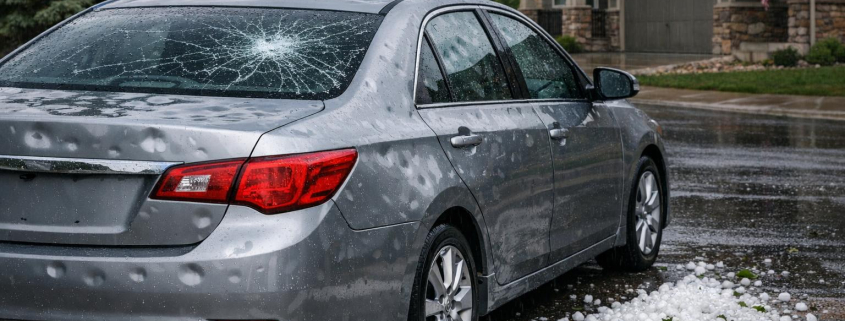
Stock photo of a hail-damaged car with dents and a cracked windshield in a Colorado neighborhood, captured after a storm with wet pavement and cloudy skies.

A practical guide for Highlands Ranch drivers heading into hail season

If you drive in Colorado, hail isn’t a “maybe.” It’s a when. The tricky part is that many drivers don’t find out what their policy really does (or doesn’t) cover until they’re standing next to a dimpled hood or staring through a spiderwebbed windshield.

Below is a plain-English breakdown of hail damage car insurance in Colorado: which coverage pays, how deductibles work, what happens with glass claims, and the steps that help you move faster (and spend less) after the next storm.

What insurance covers hail damage to your car?

Hail is considered a non-collision event. In most standard personal auto policies, hail damage is handled under comprehensive coverage (sometimes called “other-than-collision”). Comprehensive is also the coverage that usually applies to theft, vandalism, falling objects, fire, and many weather losses. If you don’t carry comprehensive coverage, hail damage to your vehicle is typically not covered.

Quick coverage check (common scenarios)

What happened? Usually covered by Typical out-of-pocket? Notes
Hail dents hood/roof/trunk Comprehensive Your comp deductible Paintless dent repair (PDR) is often used if paint isn’t cracked.
Windshield cracks from hail Comprehensive (glass may be special) Often your comp deductible (varies) Some policies offer separate glass options or repair-first programs.
You skid in a storm and hit a curb Collision Your collision deductible Even though weather contributed, it’s still a collision loss.
Hail damages your car, but you only have liability Not covered Full repair cost Consider comp if hail risk is a concern.
Coverage always depends on your policy language and endorsements. If you’re unsure what you carry, your declarations page (the “dec page”) tells you quickly.

Deductibles: the #1 reason hail claims feel confusing

If your vehicle is insured with comprehensive coverage, you’ll have a comprehensive deductible (commonly $250, $500, $1,000, or higher). That deductible is the part you pay before the insurer pays the remaining covered amount.

A realistic example

Hail repair estimate: $3,200. Your comprehensive deductible: $1,000. If the claim is covered, you typically pay $1,000 and insurance covers the remaining $2,200 (subject to policy terms and settlement method).

Important: When storms hit the Front Range, some carriers place temporary restrictions on changing physical damage deductibles (or adding coverage) while severe weather watches/warnings are active. That’s one reason it pays to review coverage before peak hail months.

Glass claims in Colorado: repairs, replacements, and “free windshield” myths

Many Colorado drivers have heard that windshield replacement is “free” or “required by law.” In reality, Colorado does not have a statewide law that forces insurers to offer zero-deductible windshield replacement on every policy. Whether you pay a deductible depends on your carrier, your policy, and any glass-specific options you selected.

Practical takeaway: treat windshield coverage as something you should verify, not assume. Ask two specific questions:

  1. If my windshield is damaged by hail, does it fall under comprehensive—and does my comprehensive deductible apply?
  2. Do I have any separate glass endorsement, repair waiver, or deductible reduction for glass?

If you commute on C-470, I-25, or travel into the foothills often, glass coverage can be one of the most “felt” parts of your policy because small chips can spread quickly with Colorado temperature swings.

Did you know? Quick hail facts that matter for claims

Severe hail starts at 1 inch
The National Weather Service generally issues a severe thunderstorm warning when hail is 1 inch or larger (or winds are 58 mph+). That’s big enough to crack glass and dent panels.
Colorado’s hail season has a predictable window
Colorado’s “typical” severe hail season is often described as running from mid-April to mid-August, with frequent activity in late spring and early summer.
Comprehensive vs. collision is a real cost lever
Hail losses are commonly handled under comprehensive. If your comp deductible is high, you may “feel” hail losses more than you expect.

Step-by-step: What to do after hail damages your car

1) Document the damage the same day

Take clear photos in good lighting: wide shots (whole vehicle), close-ups (each panel), and the windshield from inside and outside. If you can, capture a brief video walk-around. Keep a note of where the vehicle was parked and roughly when the storm hit.

2) Confirm which deductible applies

Most hail claims route to comprehensive, but glass can be handled differently depending on the policy. Before scheduling repairs, confirm whether your deductible is waived, reduced, or fully applied.

3) Choose the right repair method (PDR vs. body shop)

If hail dents didn’t crack paint, paintless dent repair is often the preferred method because it preserves factory finish and may be faster. If paint is broken or panels are stretched, traditional body work may be needed.

4) Watch for “too good to be true” offers

After big storms, pop-up vendors can appear quickly. Be cautious with offers that promise to “cover your deductible” in ways that don’t make sense or pressure you to sign over payment rights without clear terms. If something feels off, pause and ask your agent to review the plan.

5) Ask about timelines and rental coverage

If your vehicle is not safely drivable (for example, visibility issues from windshield damage), ask whether you have rental reimbursement and what daily/total limits apply. Scheduling can tighten quickly after widespread hail.

Highlands Ranch local angle: why preparation matters here

Highlands Ranch sits right in the wider Front Range corridor where spring and early summer storms can build fast. When hail hits Douglas County and the south Denver metro, the practical challenge isn’t just the storm—it’s the surge: body shops book out, glass vendors get slammed, and claim volume can slow down inspections.

A quick “before the next warning” checklist

  • Review your comprehensive deductible and decide if it still fits your budget.
  • Confirm whether you have any glass-specific option or windshield deductible waiver.
  • If you lease/finance, make sure you carry comprehensive + collision as required by the lender.
  • Keep your insurer/agent contact info saved so you’re not searching during a storm.

Want a quick coverage check? You can also explore our Auto & Vehicle Insurance page for an overview of how we help drivers match coverage to Colorado’s real-world risks.

CTA: Make sure your policy is ready for hail season

Mountain Storm Insurance is an independent, locally owned agency based in Highlands Ranch. We can compare options from multiple carriers and help you understand what “hail coverage” really means on your specific policy—especially your comprehensive deductible and glass coverage.

FAQ: Hail damage car insurance in Colorado

Will my rates go up if I file a hail claim?

It depends on your carrier and your overall rating factors. Hail is typically treated as a comprehensive (non-collision) claim, which is often rated differently than at-fault accidents. The safest approach is to ask how your specific carrier handles comprehensive claims and consider the claim amount relative to your deductible.

If my car has hail dents but still drives fine, should I file a claim?

Consider (1) the repair cost versus your deductible, (2) whether the damage affects resale value, and (3) whether you have a lease return standard to meet. If the estimate is only slightly above your deductible, you may prefer to handle it out of pocket.

Does liability-only insurance cover hail damage?

No. Liability coverage pays for injuries and damage you cause to others. Hail damage to your own vehicle is usually covered only if you carry comprehensive coverage.

Is windshield replacement “free” in Colorado?

Not automatically. Some policies may offer glass-friendly options, but there’s no blanket statewide rule that guarantees zero-deductible windshield replacement for every driver. Check your declarations page and ask your agent how glass is handled under your plan.

What if hail damages both my roof at home and my car?

Those are usually separate claims under separate policies (homeowners for the home, auto for the vehicle). If you want to reduce coordination stress, bundling can help—just make sure both policies have deductibles you can comfortably handle during the same season. If you need both, see our Property Insurance overview as well.

Glossary (helpful hail-claim terms)

Comprehensive coverage
Auto coverage that typically pays for non-collision losses like hail, theft, vandalism, and certain weather events (subject to your policy).
Collision coverage
Coverage that typically pays when your vehicle is damaged in a collision with another vehicle or object (subject to your collision deductible).
Deductible
The amount you pay out of pocket on a covered claim before the insurer pays the remaining covered amount.
PDR (Paintless Dent Repair)
A repair method that removes dents without repainting, often used for hail when paint isn’t cracked.
Declarations page (“Dec page”)
The summary page of your policy listing your coverages, limits, deductibles, vehicles/insureds, and effective dates.

If you’d like a quick review focused on hail damage car insurance in Colorado—especially comprehensive deductibles and windshield coverage—visit our Request a Quote page and we’ll help you sort the details before the next storm rolls through.
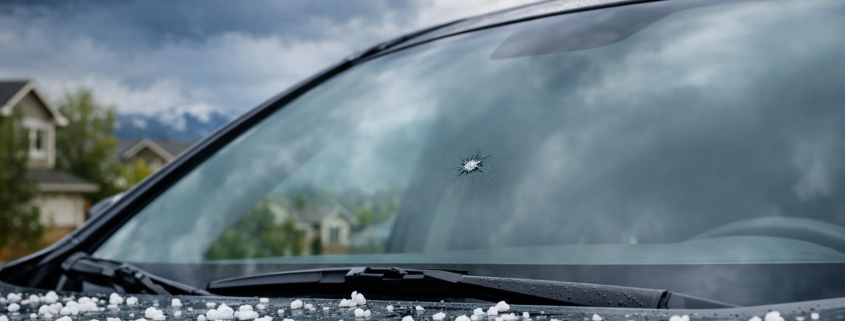
Close-up stock photo of a car windshield with a chip and hailstones on the hood, outdoors in a Colorado suburb with stormy spring sky.

A practical guide for Highlands Ranch drivers who want clear answers before the next storm

Colorado’s Front Range sits in “Hail Alley,” and the damaging season typically ramps up mid-April and runs into late summer. For many Highlands Ranch households, it’s not a question of if a windshield will chip or crack—it’s when. The frustrating part is that “windshield replacement insurance” can mean very different things depending on your policy: comprehensive vs. collision, glass endorsements, deductible rules, and whether advanced safety systems need recalibration.

Below is a straightforward breakdown of what most Colorado drivers need to know, the decisions that actually affect out-of-pocket costs, and how to handle a claim without getting steered into a solution that doesn’t fit your vehicle or budget.

How windshield replacement is covered in Colorado (and what “glass coverage” really means)

Most windshield claims fall under comprehensive coverage (sometimes called “other than collision”). Comprehensive is typically the part of an auto policy that addresses non-collision events such as hail, flying debris, vandalism, or theft-related damage.

Quick rule of thumb
Hail/rock chip/flying debris: usually comprehensive
Crash impact (you hit something or something hits you in a collision): usually collision

Many drivers hear “full glass” or “$0 glass” and assume it’s required or automatic. In Colorado, it’s common for insurers to offer optional glass coverage (or a separate glass deductible), but it is not universally included by default. The details live on your declarations page—where you’ll see your comprehensive deductible and any specific glass options you elected.

Deductibles: the #1 reason a “covered windshield” still costs money

A windshield can be “covered” and still require you to pay your deductible. In practice, your out-of-pocket cost usually comes down to these three items:

What you have What it usually means Typical out-of-pocket
Comprehensive coverage (standard) Windshield damage is usually eligible, subject to your comp deductible. Your comp deductible (often $250–$1,000+)
Separate “glass deductible” endorsement Some policies set a lower deductible specifically for glass. Lower fixed amount (example: $0 or $100)
No comprehensive coverage Most non-collision glass damage won’t be paid by the policy. Likely full cost of repair/replacement

One more important Colorado-specific note: insurers (and repair vendors) are not allowed to rebate or refund your deductible as an “incentive” to use a particular shop. If someone’s advertising “we’ll waive your deductible,” that should be treated as a red flag and verified carefully. Colorado law restricts deductible rebates tied to glass repair/replacement.

Repair vs. replacement: when a chip can be fixed (and why it matters)

If you catch damage early, a chip repair may be possible. Repairing a chip can help prevent a spider-crack that turns into a full replacement, especially with Colorado temperature swings and spring hail.

Common reasons replacement is required
• The crack extends across the glass or continues growing
• Damage is in the driver’s primary line of sight
• Damage is near the edge (structural integrity concerns)

Coverage can differ between repair and replacement, depending on your carrier and endorsement choices. If your goal is minimizing out-of-pocket cost, the best move is to confirm your deductible and ask whether your policy treats repair differently than replacement.

Modern vehicles and ADAS: calibration costs you don’t want to discover after the fact

Many newer vehicles have cameras and sensors mounted to or near the windshield that support Advanced Driver Assistance Systems (ADAS)—features like lane-keeping assist, forward collision warnings, and adaptive cruise control.

If the windshield is replaced, those systems may require calibration to ensure safety features work correctly. This is where surprise costs can show up if it’s not handled correctly from the beginning. When you’re comparing quotes or deciding whether to file a claim, always ask:

• Does my vehicle require ADAS calibration after replacement?
• Is calibration included in the repair facility’s process and documentation?
• Will my policy treat calibration as part of the covered windshield loss?
• Will OEM glass be required or recommended for sensor/camera performance?

Step-by-step: how to file a windshield claim in Colorado without headaches

1) Confirm the coverage type and deductible before scheduling

Check your declarations page (or ask your agent) for: comprehensive deductible, any glass endorsement, and whether the policy lists a separate glass deductible.

2) Document the damage right away

Take photos from inside and outside the vehicle, including a wider shot showing the location on the windshield. If hail caused the damage, note the approximate time and place.

3) Ask about ADAS calibration (even if the crack looks “simple”)

Many windshields are no longer “just glass.” Confirm whether calibration is required and how it will be handled.

4) Clarify parts and workmanship expectations

Ask what glass is being installed (OEM vs. aftermarket), what warranty is provided, and whether the shop documents calibration results when applicable.

5) Keep claim and invoice records

Save the invoice, claim number, and any calibration documentation. If you sell the car later, paperwork can help support the vehicle’s maintenance history.

Highlands Ranch hail-season angle: what to review in April before storms start stacking up

April is when many Front Range drivers begin to see the first meaningful hail events. If you’re reviewing coverage now, focus on what actually changes your financial outcome:

Comprehensive deductible: If it’s $1,000–$2,500, a windshield claim may not make sense unless replacement and calibration costs clearly exceed it.
Glass endorsement option: If available, a lower glass deductible can be a practical fit in hail-prone areas.
Vehicle tech level: If your windshield integrates cameras/sensors, plan for calibration questions up front.
Garaging and commute realities: If you park outdoors at work or commute I-25 / C-470 corridors regularly, your exposure is different than a weekend-only vehicle.

If you want help translating your current declarations page into plain English, an independent agency can compare multiple carrier options and show what changes (and what doesn’t) when you adjust deductibles or add glass coverage.

Request a quote that fits Colorado hail reality (not a one-size-fits-all policy)

Mountain Storm Insurance helps Highlands Ranch drivers compare carriers and tailor deductibles and glass options around real-world risk—especially heading into hail season. If you’re trying to reduce surprise windshield expenses, we’ll review your current setup and show clear trade-offs before you switch.

FAQ: Windshield replacement insurance in Colorado

Does Colorado require free windshield replacement (zero deductible)?
Colorado policies commonly cover windshield damage under comprehensive, but zero-deductible replacement is not automatically guaranteed. Many insurers offer optional glass coverage or a separate glass deductible—your declarations page is the fastest way to confirm what you have.
If I have a $1,000 comprehensive deductible, should I even file a claim?
Sometimes yes, sometimes no. If your replacement plus required ADAS calibration is significantly above your deductible, filing can make financial sense. If the total cost is near or below your deductible, paying out of pocket can be simpler.
Will insurance pay for ADAS calibration after windshield replacement?
Often it can be covered as part of the windshield claim when replacement is covered, but it depends on your carrier and claim handling. Confirm coverage and documentation requirements before work begins.
Is chip repair treated differently than replacement?
It can be. Some policies handle repair more favorably than replacement, and some carriers encourage repair to prevent larger losses. Always confirm how your policy applies deductibles to repair vs. replacement.
Can a glass shop “waive my deductible” in Colorado?
Be cautious. Colorado restricts deductible rebates offered as an inducement tied to glass repair/replacement. If you see this advertised, verify details with your insurer and agent so you don’t end up responsible for unexpected costs or claim complications.

Glossary (quick definitions)

Comprehensive coverage
Auto coverage that typically applies to non-collision events like hail, vandalism, theft, and flying debris damage (subject to your deductible).
Deductible
The amount you pay out of pocket before insurance pays the remaining covered cost.
Glass endorsement / glass deductible
An optional policy feature that may set a different (often lower) deductible for windshield/glass claims than your standard comprehensive deductible.
OEM glass
Original Equipment Manufacturer glass—made to the same specifications as the glass installed at the factory (terminology and availability vary by vehicle and carrier rules).
ADAS calibration
The process of aligning and verifying cameras/sensors (often mounted near the windshield) so safety systems function correctly after a windshield replacement.