Tag Archive for: highlands ranch

Stock photo of paper cutouts of a house, car, and family protected by an umbrella, representing layered liability insurance coverage for Highlands Ranch homeowners in Colorado.

A clearer way to protect your assets when “standard liability limits” aren’t enough

Affluent homeowners in Highlands Ranch often carry strong home and auto policies, but still discover a gap: the liability limits on those policies can be surprisingly small compared to the cost of a serious injury claim, a major at-fault auto accident, or an incident involving a teen driver, dog bite, or guest injury. Umbrella and excess liability policies both add an extra layer of protection—yet they’re not interchangeable. This guide explains the differences in plain language, how carriers typically structure requirements, and how to think about personal umbrella insurance cost in Colorado without guessing.

Umbrella vs. Excess Liability: the simple definition

Excess liability is usually “follow-form.” That means it primarily extends the liability limit of a specific underlying policy (often auto liability or homeowners liability) and typically mirrors what that underlying policy covers.
Umbrella liability also increases your liability limits, but it may provide broader protection than the underlying policies in certain situations (depending on the umbrella’s wording). It can also sit over multiple policies (auto + home + sometimes recreational vehicles, rentals, etc.), helping create one coordinated layer of extra liability protection.
Practical takeaway: Excess = “more of the same.” Umbrella = “more, and sometimes broader.” The details matter, especially around exclusions, defense coverage, and what counts as an underlying “scheduled” policy.

Why liability planning feels different in Highlands Ranch

Highlands Ranch households often have a higher asset profile: home equity, retirement accounts, brokerage assets, and higher income that could be targeted in a lawsuit. Even when you carry “good insurance,” you can still be underinsured on liability because many homeowners policies are issued with personal liability limits such as $100,000 or $300,000 unless you deliberately increase them. Auto liability limits can also be selected too low for the potential severity of a serious injury accident.
Colorado also requires drivers to carry minimum liability limits of $25,000 per person / $50,000 per accident for bodily injury and $15,000 for property damage—limits that are legally compliant but can be quickly outpaced by a major loss. Many umbrella carriers require higher underlying limits than the state minimum before they’ll offer umbrella coverage.

What a personal umbrella policy typically sits on top of

A personal umbrella is designed to attach above (“schedule over”) specific underlying liability policies. Most commonly, that means:
Auto liability
If an at-fault accident exhausts your auto bodily injury/property damage liability limits, an umbrella can respond after those limits are used up—assuming the loss is covered and underlying requirements are met.
Internal resource: Auto & Vehicle Insurance
Homeowners / renters / condo personal liability
Slip-and-fall allegations, dog bite claims, and certain personal injury claims can exceed standard liability limits. An umbrella adds another layer after the homeowners liability limit is exhausted.
Other exposures (often optional or situational)
Rental properties, recreational vehicles, watercraft, and certain secondary residences may need to be listed as underlying policies for the umbrella to apply. This is exactly where “umbrella vs. excess” differences become important—because the umbrella’s scope depends on how it’s written and what policies it schedules.

Side-by-side comparison (what detail-oriented shoppers should focus on)

Feature Umbrella Liability Excess Liability
What it does Adds extra liability limits over multiple underlying policies; may offer broader coverage than underlying in some cases Adds extra limits over a specific underlying policy; usually follows the underlying policy’s terms (“follow-form”)
Best for Households wanting one coordinated liability layer across home + auto and common personal exposures Meeting a specific higher-limit need over a single policy when broader coverage isn’t required
Underlying requirements Often requires higher underlying auto/home liability limits than “default” selections (varies by carrier) Depends on the specific underlying policy being extended
Common misunderstanding Assuming “$1M umbrella” automatically fixes low auto/home limits without adjusting underlying policies Assuming excess provides broader coverage (it usually doesn’t—most often it’s just higher limits)

How to estimate personal umbrella insurance cost in Colorado (without relying on guesswork)

Umbrella pricing is not one-size-fits-all, but it becomes predictable when you look at the inputs carriers actually underwrite. If you’re comparing quotes mid-year, focus on these variables first:

1) Your chosen umbrella limit

Many families start comparisons at $1,000,000 and consider $2,000,000+ when assets and income exposure are higher. The “right” limit is a planning decision—not a default.

2) Underlying auto & home liability limits (and whether they meet the umbrella’s minimums)

A common surprise: your umbrella quote may assume you increase underlying limits (for example, raising auto BI/PD and homeowners personal liability). If those underlying limits aren’t adjusted, you might face an umbrella declination—or an uncovered “gap” if a claim falls into a layer that should have been covered by underlying insurance.

3) Household drivers and driving history

Teen drivers, recent accidents/violations, and vehicle usage patterns can materially affect umbrella eligibility and premium. If you’re shopping mid-year, this is one of the first areas underwriters evaluate.

4) Property and lifestyle risk factors

Items like certain dog breeds, a trampoline, a pool, or frequent entertaining may influence underwriting. This doesn’t mean “no umbrella,” but it often means the policy form and carrier appetite matter.

A step-by-step checklist to avoid gaps when you add umbrella coverage

Step 1: Gather your current declarations pages

For auto and home (and any rentals or recreational policies). The dec pages show your current liability limits, which is the foundation for any umbrella recommendation.

Step 2: Confirm your underlying liability limits match the umbrella’s required minimums

If your auto is near state minimums, it’s unlikely to be sufficient for an umbrella carrier. Aligning limits first can prevent sticker shock and prevents “paper coverage” that doesn’t work the way you think it does.

Step 3: Check what’s scheduled—and what isn’t

If you own a rental condo, a second home in the mountains, or have a recreational exposure, confirm whether it needs to be listed as underlying insurance. Missing schedules are a common source of misunderstandings.

Step 4: Ask specifically about exclusions and “drop-down” coverage

A well-structured umbrella can be broader than excess liability, but not all umbrellas behave identically. Reviewing exclusions is where experienced guidance matters most.

Step 5: Re-check limits after big life changes

New drivers, new home purchases, mountain property usage, remodels, or a new business side-hustle can all change liability exposure. A mid-year policy review is a smart time to recalibrate.

Local angle: Colorado realities that influence umbrella conversations

Along the Front Range, driving density, weather-related accidents, and higher property values can all amplify claim severity. For Highlands Ranch families, umbrella planning often comes up when:

You add a teen driver or a newly licensed young adult to the household auto policy
You purchase a second home (including mountain properties) or begin renting out a property
You host often (higher guest exposure), own higher-value vehicles, or want stronger asset-protection planning

If you also need coverage guidance beyond personal lines—especially if you own a contracting, restoration, or trade business—your personal umbrella should be coordinated with your business liability strategy rather than treated as a substitute.

Related coverage page: Business Insurance

Request an umbrella quote review (with a real side-by-side comparison)

Mountain Storm Insurance is an independent, locally owned agency based in Highlands Ranch. We can compare multiple carriers, confirm underlying limit requirements, and help you choose between umbrella vs. excess liability based on how you actually live—not generic defaults.
Request a Quote

Tip: If you have your auto and home declarations pages handy, we can usually identify umbrella readiness (and any gaps) much faster.

FAQ: Umbrella vs. excess liability (Colorado homeowners)

Is umbrella insurance the same as excess liability?

Not exactly. Both can add higher liability limits, but excess liability typically follows the underlying policy’s coverage terms, while an umbrella may provide broader coverage in certain scenarios (depending on the umbrella form). The policy wording and how it schedules underlying insurance are decisive.

How much umbrella coverage do most Highlands Ranch families consider?

Many families start comparing $1,000,000 and evaluate $2,000,000+ when assets and income exposure are higher. The best limit depends on your asset profile, drivers, property exposures, and how your underlying limits are structured.

Do I have to increase my auto/home liability limits to buy an umbrella?

Often, yes. Many umbrella carriers require higher underlying limits than what people currently carry by default. Increasing underlying limits can also improve the “shape” of your protection by reducing the chance of a gap between what the umbrella expects and what the underlying policy provides.

Does an umbrella cover business activities?

Usually not in the way people hope. Personal umbrellas are designed for personal exposures, not to replace commercial general liability or professional liability. If you own a business, it’s important to coordinate personal and business policies intentionally.

What’s the best way to compare personal umbrella insurance cost in Colorado?

Compare apples-to-apples: same umbrella limit, same underlying limits, and the same household/driver profile. Then review what’s scheduled, exclusions, and defense coverage approach. This is where an independent agency comparison is especially helpful.

Glossary (quick definitions)

Underlying policy: The base policy (auto, homeowners, etc.) that pays first on a covered claim before umbrella/excess applies.
Underlying limit: The maximum the underlying policy will pay for liability (example: $250,000/$500,000 on auto bodily injury liability or $300,000 personal liability on homeowners).
Follow-form: Describes an excess policy that generally mirrors the underlying policy’s coverage terms and exclusions.
Scheduled policies: Policies that must be listed/declared on the umbrella so the umbrella knows what it sits over.
Defense costs: Attorney fees and legal expenses to defend you in a liability claim. Whether defense is inside or outside limits depends on policy form.

Neatly arranged insurance-related objects on a desk, including a small house, toy car, and policy folder, illustrating liability coverage planning for Colorado homeowners.

A clear, side-by-side guide to avoiding liability gaps (and paying for coverage you don’t need)

If you’re reviewing your insurance mid-year and your net worth, income, and lifestyle have grown, the big question often becomes: should you add an umbrella policy, an excess liability policy, or both? In Colorado, the terms get used interchangeably in casual conversation—but they are not always the same thing. This guide breaks down how each option works, where coverage can differ, and how to choose limits that fit the way Highlands Ranch households actually live (cars, homes, guests, youth drivers, mountain weekends, rentals, and more).

Quick definitions (plain English)

Umbrella insurance is extra liability protection that usually sits over multiple policies (auto, homeowners, sometimes rental/landlord, watercraft, etc.) and can sometimes broaden coverage beyond what the underlying policy covers.

Excess liability insurance increases the limit over a specific underlying policy and typically follows the underlying policy’s terms (same coverages and exclusions—just a higher ceiling).

Why the difference matters for Highlands Ranch homeowners

When you have higher assets and higher “future earnings” to protect, liability isn’t just about paying a claim—it’s about how a claim could impact your savings, investments, property, and long-term plans. Both umbrella and excess can add $1M+ of protection, but the claim outcome can hinge on whether the extra policy:

Only raises limits (excess), or

Raises limits and potentially fills certain coverage gaps (umbrella).

That “gap” concept is where many detail-oriented homeowners want clarity—especially when they’ve upgraded their home, added a teen driver, host more gatherings, or travel frequently to mountain communities.

Umbrella vs. Excess Liability: side-by-side comparison

Feature Umbrella Policy Excess Liability Policy
What it does Adds extra liability limits and may broaden protection beyond underlying policies Adds extra liability limits over a specific underlying policy (usually “follows form”)
Typical structure One policy sitting over home + auto (and sometimes other lines) One policy that increases limits for one underlying policy (or one scheduled coverage)
Coverage scope Can sometimes cover certain claims not covered by underlying policies (varies by carrier and form) Usually matches underlying policy coverage terms/exclusions; primarily raises limits
Underlying limit requirements Commonly requires higher auto and home liability limits (often around 250/500 auto and 300k home liability, depending on carrier) Also requires specific underlying limits; requirements depend on what policy it sits over
Best fit Households with multiple liability exposures who want broad personal protection Situations where you want more limit over a specific exposure and don’t need broadened coverage
Common confusion Assuming it automatically covers every liability situation (it doesn’t—forms vary) Assuming it’s identical to an umbrella (it may not fill any gaps)

Key takeaway: if you want “more limit only,” excess may work. If you want “more limit plus potential broadened protection across multiple policies,” an umbrella is often the better match—assuming the policy form and underlying structure align.

How underlying limits and “gaps” can surprise people

Most umbrella carriers require you to carry higher liability limits on your auto and home before they’ll add the umbrella layer. As a common example (not universal), carriers may want auto liability around $250,000/$500,000 and homeowners personal liability around $300,000. If you don’t maintain the required underlying limits, you can create a gap where you’re responsible for part of a loss.

This is one reason an independent agent review helps: we check your underlying limits, confirm how each policy stacks, and verify whether any exposures (like a rental property, watercraft, or a teen driver) need special handling to keep the umbrella/excess from becoming a false sense of security.

Step-by-step: how to choose between umbrella vs. excess (and pick a sensible limit)

1) Inventory your real-life liability exposures

Think beyond “I’m a careful driver.” Consider: multiple vehicles, youth/college drivers, frequent guests, a dog, a trampoline, a home gym, e-bikes, mountain cabins, short-term rentals, volunteer board roles, and higher public visibility (executive roles, professional licenses).

2) Confirm what your current policies already cover (and what they exclude)

“Liability” on a homeowners policy isn’t identical across carriers. Auto liability, too, has moving parts (bodily injury vs property damage, split limits vs combined single limit). An excess policy that follows-form won’t fix a missing coverage grant—an umbrella might, depending on form.

3) Check underlying limit requirements before you shop the umbrella

If your auto/home limits are below a carrier’s umbrella requirements, you may need to raise those first. This often improves your liability foundation and helps the umbrella behave the way people assume it will behave: as a true second layer.

4) Pick a limit based on what you’re protecting—not just what “sounds big”

Many households choose umbrella limits in $1M increments. A common planning approach is to consider your net worth plus “future earnings vulnerability,” then select a limit that would keep a severe claim from changing your long-term plan. Your exact need depends on your assets, risk profile, and exposures.

A local Highlands Ranch angle: why umbrella discussions are common here

Highlands Ranch homeowners often revisit liability protection after home value changes, remodeling projects, or adding vehicles and drivers to the household. In addition, many families spend time across the Front Range and the mountains—meaning more driving exposure and more “guest and recreation” exposure over the year.

The practical goal is simple: make sure your liability plan is coordinated. Your auto and property policies should be written with umbrella/excess requirements in mind, and your umbrella/excess selection should reflect how you actually live, host, drive, and travel in Colorado.

If you’re also reviewing your underlying policies, these pages may help: Property (homeowners/condo/renters) insurance options and Auto & vehicle insurance options.

Want a second set of eyes on your liability protection?

Mountain Storm Insurance is a locally owned independent agency based in Highlands Ranch. We can compare multiple carriers and help you understand—line by line—whether an umbrella policy, an excess liability policy, or a coordinated mix is the best fit for your household and budget.

FAQ: Umbrella insurance vs excess liability (Colorado)

Is umbrella insurance always better than excess liability?

Not always. If you only need higher limits over a single underlying policy and you don’t need broader coverage grants, an excess policy can be appropriate. If you want one coordinated layer over multiple personal policies (auto + home + more), umbrella is often a better “whole household” solution.

Can I buy an umbrella if I only carry state-minimum auto limits?

Usually no. Umbrella carriers typically require higher underlying liability limits on auto and homeowners before they’ll issue the umbrella. The exact requirement varies by carrier, but it’s commonly far above minimum limits.

Does an umbrella policy cover every possible lawsuit?

No. Umbrellas still have exclusions and conditions, and coverage can vary by carrier and policy form. The best approach is to review your umbrella contract language alongside your underlying home/auto policies so you know what’s truly covered.

How much umbrella coverage should I carry?

A common planning approach is to consider what you’re protecting (assets + income trajectory) and choose limits in $1M increments that would prevent a severe liability claim from forcing major financial changes. A tailored recommendation depends on your household exposures, driving profile, properties, and whether you have higher-risk factors like teen drivers or frequent entertaining.

Should my umbrella be with the same carrier as my home and auto?

It can simplify coordination, but it isn’t always required. What matters is that the underlying limits meet the umbrella/excess requirements and the policies are scheduled properly to avoid gaps. This is a common place where an independent agent can add value by coordinating carriers and documentation.

If you’d like general insurance Q&A, you can also visit our site’s resources: Insurance FAQ.

Glossary (helpful terms)

Underlying policy (or primary policy)
Your base auto/home/business policy that pays first up to its liability limit before umbrella/excess applies.
Underlying limit requirement
The minimum liability limits you must carry on the underlying policies to keep your umbrella/excess protection working as intended.
Split limits (e.g., 250/500)
Auto liability limits shown as two numbers: the first is the per-person bodily injury limit; the second is the per-accident bodily injury limit (property damage is often shown as a third number).
Combined Single Limit (CSL)
One total liability limit that can apply across bodily injury and property damage (commonly used in some auto policies).
Follow-form excess
A type of excess liability that typically uses the underlying policy’s coverage terms and exclusions, mainly increasing the amount of coverage.
umbrella insurance what does it cover homeowners colorado

A simple way to protect your savings, future income, and lifestyle from one expensive liability claim

If you own a home in Highlands Ranch and your assets are growing—home equity, retirement accounts, college savings, maybe a teen driver—your biggest financial risk often isn’t a fire or hailstorm. It’s being held legally responsible for an injury or property damage that exceeds the liability limits on your home or auto policy. A personal umbrella policy is designed for exactly that gap: it adds extra liability protection (and typically legal defense) after the underlying limits on your home/auto have been used up.

What umbrella insurance covers (in plain English)

Umbrella insurance is extra personal liability coverage that sits on top of your existing policies—most commonly your auto and homeowners liability. If a covered claim or lawsuit is larger than your underlying policy limit, the umbrella can pay the “overage” up to the umbrella limit you choose (often $1 million and up).

Common situations an umbrella policy may help with

Serious auto accident: Your teen rear-ends another vehicle and multiple people are injured. Medical costs, lost wages, and pain-and-suffering claims can push well beyond standard liability limits.
Injury at your home: A guest slips on icy front steps, falls on your driveway, or is hurt near a trampoline, playset, or pool.
Dog-related injuries: Colorado has a dog-bite statute that can create significant liability exposure in certain bite scenarios, especially involving “serious bodily injury.”
Defamation / personal injury liability: Some umbrellas extend to certain “personal injury” claims (like libel or slander), depending on the policy form.
Property damage to others: You (or a family member) accidentally cause major damage to someone else’s property and it exceeds underlying limits.

What umbrella insurance typically does not cover

Umbrella policies are powerful, but they aren’t “anything that happens” coverage. Exclusions vary by carrier and endorsement, so the policy language matters. Common exclusions or limitations include:

Damage to your own property (that’s generally handled by homeowners/auto physical damage coverage).
Your own injuries (health insurance, MedPay/PIP where applicable, or disability coverage may apply instead).
Intentional acts (most policies won’t cover harm you intentionally cause).
Business-related liability (personal umbrellas often exclude business activities; business owners typically need commercial liability or a commercial umbrella).
Vehicle types not scheduled/covered (certain recreational vehicles, watercraft, or “toys” may require specific underlying coverage or endorsements).

Practical tip: Umbrella claims can be denied if the underlying limits don’t meet the umbrella carrier’s requirements. When we review umbrellas at Mountain Storm Insurance, we look at the full “stack”—auto, home, any rentals, and any specialty exposures—so there aren’t surprise gaps.

How umbrella coverage “layers” with your home and auto

Think of liability protection as a ladder. Your homeowners and auto policies are the first rungs. Your umbrella is the higher rung that helps if a claim climbs past the first layer.

Layer What pays first? What it’s designed to handle Where umbrella fits
Auto liability Auto policy Injuries/property damage you cause in an auto accident Umbrella can apply after your auto liability limit is exhausted
Homeowners personal liability Home policy Injuries/property damage arising from your premises and many personal activities Umbrella can extend protection above the home liability limit
Umbrella liability Umbrella policy Large lawsuits that exceed underlying limits; often includes broader defense support Adds $1M+ capacity (depending on what you buy)

Note: Your umbrella carrier will usually require you to carry certain minimum liability limits on your underlying home and auto policies (for example, many carriers look for higher-than-state-minimum auto limits and at least a standard homeowners liability level). Requirements vary, so this is one of the first items we verify when quoting.

Step-by-step: choosing the right umbrella limit for your household

1) Add up what a lawsuit could realistically reach

A serious liability claim can include medical bills, future care, lost income, legal costs, and non-economic damages. Auto accidents are a common driver of high-dollar claims—especially when multiple vehicles are involved or a long-term injury is alleged.

2) Identify what you need to protect

Liquid assets: savings, brokerage accounts, some non-qualified investments
Home equity: Highlands Ranch home values can make equity meaningful, and it can be a target in a judgment
Future earnings: wages can be exposed through garnishment in some situations
Growing risks: teen drivers, frequent hosting, pets, recreational activities, rental properties

3) Check your underlying limits before you shop umbrellas

Colorado’s required minimum auto liability limits are often quoted as 25/50/15 (per person/per accident/property damage), but umbrella carriers commonly require higher underlying limits than the state minimum. If your auto and home limits are too low, you may need to increase them first—or choose a carrier whose requirements align with your profile.

4) Decide whether you want “just enough” or a cushion

Many Highlands Ranch homeowners choose a $1M umbrella as a starting point, then adjust upward as assets and risk exposure increase. The right answer depends on your household, not a one-size-fits-all rule.

Local angle: why umbrella coverage matters in Highlands Ranch

Highlands Ranch households often have a combination that increases liability exposure: higher home values (and equity), busy family schedules, teen drivers learning in heavy metro traffic patterns, and frequent hosting—cookouts, birthdays, neighborhood gatherings. One incident can become a large claim quickly, and lawsuits can pursue assets and future earnings, not just the insurance limit you carry.

Teen drivers

New drivers increase risk frequency. Higher underlying auto limits plus an umbrella can help protect the household balance sheet.

Hosting & home activities

Icy walkways, backyard play, and guest injuries are common sources of liability claims.

Pets

Colorado dog-bite liability rules can create serious financial exposure in certain situations—worth reviewing before you assume “my home policy has me covered.”

Get an umbrella quote that actually matches your risk (not just a generic $1M add-on)

Mountain Storm Insurance is an independent agency based in Highlands Ranch. We’ll review your underlying home and auto liability limits, identify common umbrella gaps, and shop multiple carriers to find a fit for your household and budget.

FAQ: umbrella insurance for Colorado homeowners

Does umbrella insurance cover my own injuries or my own property damage?

Typically no. Umbrella insurance is mainly about liability to others (you being held responsible). Your own medical bills usually fall under health insurance, and damage to your own home or car is handled by property/physical damage coverage.

If I have an umbrella, can I lower my home or auto liability limits?

Usually you shouldn’t. Most umbrella carriers require minimum underlying limits. If you lower your base liability too far, you could create a gap or violate the umbrella’s requirements.

Does an umbrella policy cover a teen driver in my household?

Often yes, if the teen is a listed driver and the underlying auto policy is properly written—but details matter. We recommend confirming household drivers, vehicles, and any away-at-school situations when you apply.

Is umbrella insurance only for “wealthy” families?

Not necessarily. If you have meaningful home equity, savings, and strong future earning potential, you may be “asset-rich” in the eyes of a lawsuit—even if you don’t feel wealthy day-to-day.

Will an umbrella policy cover business activities or a side hustle?

Many personal umbrellas exclude business-related liability. If you run a business (even a small one), it’s worth reviewing business insurance options so your personal coverage and business coverage don’t leave gaps.

Glossary (quick definitions)

Liability
Legal responsibility for injury or property damage to others.
Underlying limits
The liability limits on your home/auto policies that must pay first before umbrella coverage applies.
Umbrella limit
The maximum amount the umbrella policy will pay (e.g., $1,000,000) above your underlying coverage.
Defense costs
Attorney fees and related legal expenses to defend you in a covered lawsuit (how this applies varies by policy form).
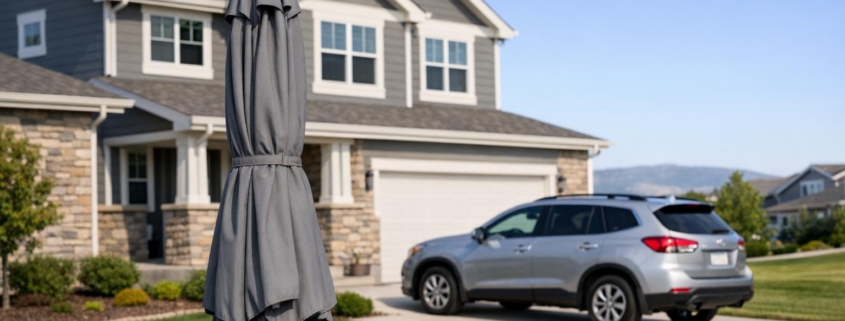
Stock photo of a Highlands Ranch, Colorado home and vehicle, with a closed umbrella symbolizing added liability protection, no people present.

A practical way to protect your home, savings, and future income—without guessing

If you’re a Highlands Ranch homeowner with growing assets (and maybe a teen driver, a dog, or a busy social calendar), your risk isn’t only “will something happen?”—it’s “if something happens, could a lawsuit reach beyond my auto and home policy limits?” Umbrella insurance is designed for that exact gap: it adds an extra layer of liability protection on top of your underlying auto and home policies, and it can also help with legal defense costs for covered claims.

At Mountain Storm Insurance, we help Colorado families choose umbrella insurance coverage limits that fit their real-world exposure—without overbuying and without leaving a costly hole in the plan.

What umbrella insurance covers (and what it doesn’t)

Umbrella insurance typically helps with:

  • Bodily injury liability (e.g., serious auto accident injuries, a guest’s injury at your home)
  • Property damage liability (e.g., major damage you cause to someone else’s property)
  • Certain personal liability claims like slander/defamation (policy-specific)
  • Legal defense costs for covered claims (often a major benefit)
Umbrella insurance usually does NOT replace:

  • Your home, auto, or health insurance (it sits above them)
  • Business liability coverage (many business activities require separate coverage)
  • Intentional acts

Step 1: Know your “baseline” liability limits in Colorado

Colorado’s minimum auto liability limits are commonly shown as 25/50/15—that’s $25,000 bodily injury per person, $50,000 per accident, and $15,000 property damage. Those minimums can be legally compliant and still be financially dangerous when medical bills, attorney fees, and lost wages stack up after a serious crash.

For umbrella planning, the key idea is this: your umbrella doesn’t usually “fix” low underlying limits. Umbrella carriers commonly require you to carry higher auto and home liability limits before the umbrella policy will apply. Many insurers expect underlying limits like $250,000/$500,000/$100,000 on auto and $300,000 personal liability on your homeowners/renters policy (exact requirements vary by carrier).

Quick tip: If you currently carry state-minimum auto limits, the best first move is often raising your underlying auto and home liability limits, then adding an umbrella on top—so the whole stack works cleanly.

Step 2: Choose an umbrella limit using a simple, real-life framework

When people search “umbrella insurance coverage limits Colorado”, they usually want a number: $1M? $2M? $5M?

A practical way to decide is to estimate three buckets:

1) Exposed assets: home equity, savings, taxable investments, future wages (in certain lawsuits), and any other assets that could be targeted.
2) Your “headline risk” factors: teen drivers, frequent driving on I-25/C-470, hosting gatherings, a trampoline/pool, dogs, rental property, or coaching/volunteering where injuries happen.
3) Your current liability foundation: the liability limits on your auto and home policies (and whether they meet umbrella requirements).

Rule of thumb (without oversimplifying it): Many Highlands Ranch families start at $1,000,000 and move to $2,000,000+ as assets and exposure rise—especially once you have meaningful home equity, sizable savings, or teen drivers. The right answer depends less on “average” and more on your household’s specific risk profile.

Did you know? Quick facts that change umbrella decisions

Colorado minimum auto limits are low
Colorado’s minimum liability is commonly shown as 25/50/15. Serious injuries or a multi-car crash can exceed those limits quickly.
Umbrella requires strong “underlying” limits
Many umbrella policies won’t attach unless your auto/home liability limits meet carrier minimums (often 250/500/100 auto and 300k home liability).
Legal defense can be a major value
Even when you did nothing “wrong,” defending a liability claim can be expensive. Umbrella coverage often includes defense for covered claims.

Coverage stack breakdown: how umbrella works with auto & home

Think of liability protection as layers:

  • Layer 1: Auto liability and homeowners (or renters/condo) personal liability
  • Layer 2: Umbrella liability (kicks in after Layer 1 pays up to its limit)

If your auto policy has $250,000/$500,000 liability and you carry a $1,000,000 umbrella, you’re not “getting $1,250,000 per person” in a simplistic way. The umbrella is designed to pay after the underlying policy pays up to its limit, subject to the umbrella’s terms and conditions. That’s why we focus on building a clean, compliant underlying foundation first.

Household situation Why umbrella matters more Common starting point to discuss
Homeowner + commuter driving Auto accidents can exceed standard liability limits $1,000,000 umbrella (after raising underlying limits)
Teen driver in the household Higher frequency/severity risk; higher lawsuit exposure $1,000,000–$2,000,000 conversation range
High equity + sizable savings/investments More assets at stake in a judgment/settlement $2,000,000+ often worth pricing out
Frequent hosting, dogs, “active” property features Slip-and-fall and bite claims can become severe $1,000,000–$2,000,000 depending on assets
Note: Examples are educational and not a guarantee of coverage. Exact limits and eligibility depend on carrier underwriting, property/vehicle details, and policy language.

Highlands Ranch angle: why umbrella limits matter here

Highlands Ranch households often have a combination that makes umbrella insurance especially relevant: higher home values, increasing income, more time on the road (Denver metro commuting), and family lifestyles that include youth sports, visitors, and active weekends.

Two local planning realities we see a lot:

  • Growing equity happens fast. Even if your savings aren’t “huge,” home equity can increase your exposure to a lawsuit.
  • Teen drivers change the math. Many families buy an umbrella when a teen starts driving—not because they expect a loss, but because they know one serious accident can outrun standard limits.

If you’re not sure whether your underlying limits are set up correctly (or whether your umbrella would actually respond the way you think), a quick review can prevent unpleasant surprises.

Get a clear umbrella-limit recommendation (based on your assets and risk)

Mountain Storm Insurance is an independent agency based in Highlands Ranch. We’ll review your underlying auto and home liability limits, confirm umbrella eligibility requirements, and help you choose a limit that fits your household—not a generic template.

FAQ: Umbrella insurance coverage limits in Colorado

How much umbrella insurance do most Colorado families buy?
Many households start with $1,000,000, then consider $2,000,000+ as assets grow or when a teen driver, rental property, or higher-risk exposures are present. The best limit is the one that matches your exposure and sits on top of properly-set underlying limits.
Do I need to raise my auto and home liability limits before I can get an umbrella?
Often, yes. Many umbrella carriers require higher underlying limits (commonly in the range of 250/500/100 on auto and 300k personal liability on home/renters). If you’re below the requirement, the umbrella may not be issued—or it may not respond the way you expect.
Is umbrella insurance only for “wealthy” households?
Not necessarily. Lawsuits can pursue future income and assets, and liability claims can become expensive even for families that don’t feel “high net worth.” Umbrella insurance is often considered once you own a home, have meaningful savings, or have higher liability exposures (like teen drivers).
Does umbrella insurance cover my teen driver?
Typically, umbrella policies extend over covered household drivers on your underlying auto policy, but details vary by carrier and how the teen is listed/rated. The safest approach is to confirm the teen driver is properly included on the auto policy and that the umbrella recognizes that exposure.
Will umbrella insurance cover a claim from my home-based side business?
Often, business activities are excluded or limited under personal umbrella policies. If you earn income from work performed at home, clients visiting your home, or contracting work, you may need a business policy (or endorsements) to avoid gaps.
Can Mountain Storm Insurance shop umbrella coverage with multiple carriers?
Yes. As an independent agency, Mountain Storm Insurance can compare carrier options and underwriting requirements to help you choose limits and underlying policies that work together.

Glossary: umbrella insurance terms (plain-English)

Umbrella policy: Extra liability coverage that sits above your auto and home liability limits for covered claims.
Underlying limits: The liability limits on your base auto/home policies that must pay first before the umbrella can apply.
Per person / per accident: Auto liability limit structure that caps payment for one injured person and the total for a single accident.
Property damage (PD): Coverage for damage you cause to someone else’s property (vehicles, buildings, fences, etc.).
Defense costs: Attorney fees and legal expenses to defend you in a covered liability claim (often significant even before a settlement).