Tag Archive for: liability coverage

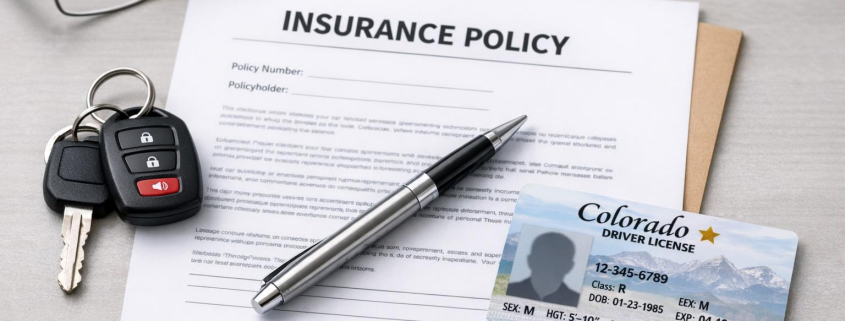
A stock photo showing car keys, an insurance document, and a Colorado driver's license arranged on a table, representing non-owner car insurance in Colorado.

Don’t own a car, but still drive? Colorado can still expect you to be insured.

Non-owner car insurance is a liability policy designed for people who don’t own a vehicle but still drive occasionally—borrowing a friend’s car, renting cars, or staying insured between vehicles. For many Colorado residents (especially during life transitions like moving, selling a car, or navigating license reinstatement), it’s a simple way to stay legal, protect your finances, and avoid costly “coverage gaps” that can raise premiums later.

What is non-owner car insurance (and what it isn’t)?

Non-owner insurance is typically a liability-only auto policy written for a driver who does not own or regularly have access to a vehicle. It’s meant for occasional driving—not for someone who uses the same household car every day.
It usually helps pay for injuries and property damage you cause to others in an at-fault accident. It can also be used in many situations where you need to file an SR-22 but don’t own a car (more on that below).
Not the same as “full coverage.” Non-owner policies typically do not include comprehensive or collision for a vehicle you’re driving, because you don’t own that vehicle.

Who should consider non-owner car insurance in Colorado?

Non-owner coverage can be a strong fit if you:
Borrow cars occasionally (family, friends) but don’t own one
Rent vehicles frequently and want liability protection beyond what a rental company offers
Sold your car and are between vehicles, but want to avoid a lapse in insurance history
• Need proof of insurance for license reinstatement (often with an SR-22 filing)
• Have a teen/young adult who drives occasionally but doesn’t own a car (depending on household setup—this one requires careful review)
When non-owner coverage is usually not appropriate: If you have regular access to a specific vehicle (especially one in your household), insurers may require you to be listed on that vehicle’s policy instead. This is one of the most common (and expensive) misunderstandings we help clients avoid.

Colorado minimum liability limits (and why “minimum” can still be risky)

Colorado requires drivers to carry liability insurance, and the commonly referenced state minimum limits are 25/50/15 (often written as 25,000 / 50,000 / 15,000). That means a policy may pay up to $25,000 for bodily injury per person, $50,000 per accident, and $15,000 for property damage. While these limits can satisfy legal requirements, they may not go far after a serious crash involving medical bills or newer vehicles.
Coverage Part What it helps pay for Colorado “25/50/15” example
Bodily Injury (per person) Injuries you cause to someone else $25,000
Bodily Injury (per accident) Total injury coverage for everyone hurt $50,000
Property Damage Damage you cause to vehicles/property $15,000
A practical approach is choosing limits that match what you’re protecting: your savings, future wages, and your family’s stability. A slightly higher liability limit can be a cost-effective way to reduce worst-case financial risk—especially for parents, households with teen drivers, or anyone frequently driving in high-traffic areas.

Non-owner insurance + SR-22 in Colorado: how it commonly works

An SR-22 isn’t a type of insurance—it’s a state-required filing your insurer submits to the Colorado DMV showing you carry the required liability coverage. If the policy cancels or lapses, the insurer can notify the state, which may trigger additional penalties or a new suspension period.
If you need an SR-22 but don’t own a car, a non-owner policy with an SR-22 filing is often the cleanest solution. It keeps you compliant while you rebuild your driving record, even during a “no car” phase of life.
Important: SR-22 requirements are very specific to your situation (reason for suspension, timeframe, reinstatement steps). If you’re unsure, it’s smart to confirm what Colorado requires before you buy any policy so the filing is done correctly and on time.

What non-owner car insurance typically covers (and common gaps)

Often included:
• Liability for bodily injury and property damage (within your selected limits)
• Option to add certain endorsements in some cases (availability varies by carrier)
Often not included:
• Damage to the car you’re driving (collision/comprehensive)
• Regular-use household vehicles (you may need to be listed on that policy instead)
• Business use driving (delivery/rideshare typically needs separate coverage)
Real-world example: If you borrow a friend’s car and cause an accident, your friend’s policy may be primary. A non-owner policy can help as secondary liability protection, depending on policy language and the situation. This is why reviewing how often you drive and whose vehicles you use matters.

Step-by-step: how to shop for non-owner car insurance in Colorado (without overpaying)

1) Be precise about how often you drive and which cars you use

“Occasional borrowing” is different from “I drive my partner’s car every day.” If you have regular access to a household vehicle, the correct solution is often being listed as a driver on that vehicle’s policy—not a non-owner policy.

2) Pick liability limits that protect your income—not just your registration

Minimum limits may satisfy the law, but they can leave you exposed if injuries are serious. Many families choose higher limits for peace of mind, especially around Denver’s commuting corridors and winter driving conditions.

3) Ask about “lapse” impact if you recently sold your car

Even a short gap in coverage history can sometimes increase your cost later. A non-owner policy may help keep continuous insurance history when you’re between vehicles.

4) If you need an SR-22, confirm the filing details before binding

Make sure the policy is written correctly as non-owner (if appropriate) and that the SR-22 filing is submitted to Colorado in the way the DMV requires. Timing matters—late filings can create expensive setbacks.

5) Compare multiple carriers (this is where independent agents shine)

Non-owner pricing and eligibility can vary widely by company. An independent agency can shop multiple carriers and help you avoid mismatches (like buying non-owner when you actually need a named-driver or owner policy).

Local angle: driving realities around Highlands Ranch

Highlands Ranch drivers often split time between neighborhood errands and higher-speed routes into metro Denver. That mix—plus winter weather, hail seasons, and heavy traffic patterns—can raise the stakes of any at-fault accident. If you’re borrowing cars during a transition (new job, new household, teen driver learning phase, or waiting on a vehicle purchase), non-owner insurance can be a practical bridge that keeps you protected while your situation changes.
If you’re in nearby communities we serve—like Fort Collins, Silverthorne, Winter Park, Breckenridge, Vail, Greeley, or Eaton—we can also help you compare options that reflect local driving conditions and insurer appetites in those areas.

Get a non-owner insurance quote that fits your exact situation

Mountain Storm Insurance is an independent, locally owned agency based in Highlands Ranch. We’ll confirm whether a non-owner policy is truly the right match, help you choose sensible liability limits, and shop multiple carriers for competitive pricing—without the jargon.

FAQ: Non-owner car insurance in Colorado

Does non-owner insurance cover the car I’m driving?

Usually, it covers your liability for injuries and property damage you cause to others. It typically does not pay to repair the vehicle you borrowed. The owner’s policy and any applicable coverages are the place to look for physical damage protection.

If I live with someone who owns a car, can I buy non-owner coverage instead of being listed?

Often, no. If you have regular access to a household vehicle, insurers commonly require you to be listed on that vehicle’s policy. Buying the wrong policy can lead to claim complications later.

Can I get an SR-22 if I don’t own a car?

In many cases, yes—an insurer can file an SR-22 on a non-owner policy. This is common for license reinstatement situations where the state requires proof of liability coverage even without vehicle ownership.

Is non-owner insurance cheaper than a standard auto policy?

Frequently, yes, because it’s typically liability-only and assumes you don’t have daily access to a vehicle. Price still depends on driving history, SR-22 needs, prior coverage, location, and insurer guidelines.

What information do I need to request a non-owner quote?

Your driver’s license details, address history, driving history (tickets/accidents), whether an SR-22 is required, and a clear description of how often you drive and whose vehicles you borrow or rent.

Glossary (plain-English definitions)

Non-owner auto insurance
A liability auto policy for drivers who don’t own a vehicle but still drive occasionally.
Liability coverage
Coverage that helps pay for injuries and property damage you cause to others in an at-fault accident.
25/50/15
A common way to express liability limits (per person/per accident/property damage). In Colorado, these limits are widely referenced as the minimum required amounts.
SR-22
A form filed by an insurer with the state to prove you carry required liability insurance, often after a license suspension or certain violations.
Coverage lapse
A gap in insurance history (no active policy). Even short lapses can sometimes increase rates later.